
Table of Contents
- What Planning a Commercial Renovation Project Actually Involves
- Your Commercial Renovation Budget Template: How to Estimate Costs
- How Long Does a Commercial Renovation Take? Realistic Timelines
- The Commercial Renovation Checklist Every Facility Manager Needs
- Hiring a Commercial General Contractor: What to Look For
- Preventive Planning vs. Reactive Repairs: The Cost Difference
- Technology and Sustainability: Two Angles Most Renovations Miss
- Planning a Commercial Renovation Project in Norwalk, CT: Local Considerations
Last Updated: June 9, 2026
Planning a commercial renovation project is one of the most complex undertakings a property owner or facility manager will face. At Tony’s Home Improvement LLC, we have worked through dozens of commercial renovation projects across Norwalk, CT, and the surrounding region, and the pattern is consistent: projects that go sideways almost always fail in the planning phase, not the construction phase.
The single insight most guides skip: a commercial renovation is not a scaled-up residential remodel. The regulatory requirements, stakeholder complexity, and cost structure are categorically different. Treat it like a bigger kitchen remodel and you will overspend, overrun your timeline, and face compliance issues.
What Planning a Commercial Renovation Project Actually Involves
Commercial renovation planning is the process of defining scope, securing regulatory approvals, budgeting capital and operating expenditures, and coordinating contractors, vendors, and occupants before a single wall comes down. It is a multi-phase discipline, not a single meeting.
The planning phase spans permitting, property condition assessment, vendor procurement, budget modeling, and phased scheduling, all before construction begins. Skip any of these and you are managing a crisis instead of a project.
The core components that planning a commercial renovation project must address include:
- Scope definition: What is being renovated, why, and to what standard?
- Regulatory compliance: What permits, inspections, and code requirements apply?
- Budget framework: What is the CapEx vs. OpEx split, and what contingency is built in?
- Timeline: What are the realistic phases, and how does occupancy factor in?
- Vendor selection: Who is doing the work, and what are the service level agreements?
- Risk management: What deferred maintenance items could surface mid-project?
According to International Facility Management Association guidance on renovation planning, facility managers who conduct a formal property condition assessment before renovation planning consistently report fewer mid-project change orders and more accurate final costs.
Order a property condition assessment before you finalize any budget numbers. Hidden deferred maintenance, especially in aging HVAC systems and electrical panels, is the single most common source of budget overruns in commercial renovation projects.
Your Commercial Renovation Budget Template: How to Estimate Costs
Build the budget from the ground up, then pressure-test it against contractor quotes, not the reverse.
Here is a practical commercial renovation budget template structure you can adapt:
| Budget Category | Description | Typical Range |
|---|---|---|
| Hard Costs | Construction, materials, labor | 60-70% of total |
| Soft Costs | Design, permits, inspections, legal | 15-25% of total |
| Contingency | Unforeseen conditions, scope changes | 10-20% of total |
| Furniture & Equipment | FF&E, technology, signage | Project-specific |
| Temporary Facilities | Relocation, storage, temp utilities | Project-specific |
Light cosmetic work runs considerably lower than full gut-renovations involving structural changes, MEP upgrades, or ADA compliance retrofits. Use cost-per-square-foot benchmarks as a starting point only, then refine with detailed line items.
CapEx vs. OpEx: Categorizing Your Renovation Spend
Capital expenditure (CapEx) covers investments that extend asset life or add capability: structural work, new HVAC systems, roof replacement, or building automation systems. These are depreciated over time. Operating expenditure (OpEx) covers maintenance that keeps the asset at its current level: repainting, replacing worn flooring, or fixing plumbing leaks. These are expensed in the period they occur.
The practical implication: significant CapEx requires capital budget approval through a different process than routine maintenance spend. Many projects stall not because of contractor availability, but because the CapEx approval process was not started early enough.
How Inflation Is Affecting Labor and Material Costs in 2026
Skilled trades, particularly electricians, plumbers, and HVAC technicians, are in high demand across Connecticut. Lead times on commercial-grade electrical components, specialty glazing, and some HVAC equipment remain extended compared to pre-2020 norms. According to [Associated General Contractor(/2026/05/20/general-contractor-services/)s of America on construction cost trends | agc.org], labor shortages in the skilled trades continue to put upward pressure on project costs in the northeastern United States.
Build a larger contingency than you think you need, lock in material pricing early, and get multiple quotes on long-lead items before finalizing your budget.
Do not use cost-per-square-foot benchmarks from articles written before 2024. Inflation in construction materials and skilled labor has made those figures unreliable. Always get current quotes from local contractors in your market.
How Long Does a Commercial Renovation Take? Realistic Timelines
A commercial renovation takes anywhere from six weeks to eighteen months or more, depending on scope, permitting complexity, occupancy requirements, and contractor availability.
| Project Type | Planning Phase | Construction Phase | Total Timeline |
|---|---|---|---|
| Cosmetic refresh (paint, flooring, fixtures) | 2-4 weeks | 4-8 weeks | 2-3 months |
| Office build-out or reconfiguration | 4-8 weeks | 8-16 weeks | 4-6 months |
| Full gut renovation (MEP, structural) | 8-16 weeks | 16-32 weeks | 6-12 months |
| Multi-phase occupied renovation | 12-20 weeks | 6-18 months | 9-24 months |
Permitting alone in Norwalk and across Fairfield County can take four to twelve weeks depending on project complexity. The thing nobody tells you: the approval chain inside your own organization often takes longer than the permitting process. Get internal sign-offs on scope, budget, and contractor selection running in parallel with permitting, not sequentially.
The Commercial Renovation Checklist Every Facility Manager Needs
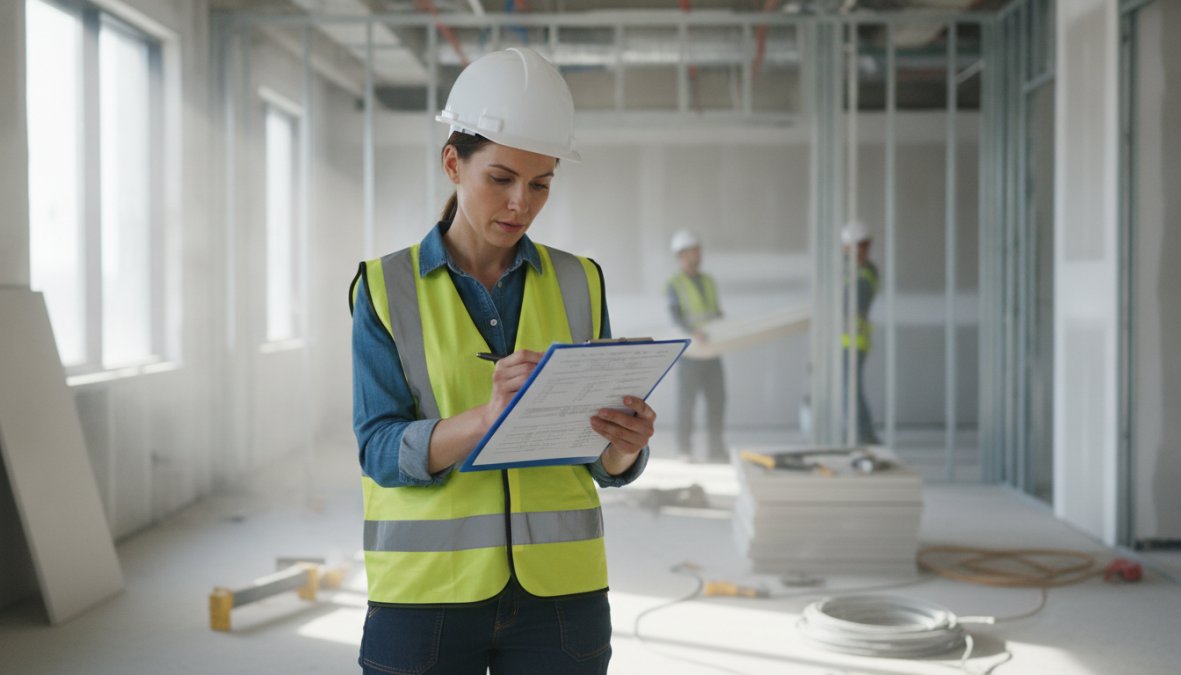
A commercial renovation checklist tracks every required action across planning, pre-construction, construction, and closeout phases. Without one, critical items fall through the gaps between teams.
Pre-Planning
- Conduct property condition assessment
- Define renovation scope and objectives
- Identify all stakeholders and decision-makers
- Establish preliminary budget range
- Confirm CapEx approval process and timeline
Planning and Design
- Engage architect or design-build firm
- Develop schematic design and construction documents
- Identify long-lead materials and equipment
- Prepare detailed budget with contingency
- Review zoning and land use requirements
Permitting and Compliance
- Submit building permit application
- Confirm fire code and life safety compliance
- Verify ADA accessibility requirements
- Obtain all required specialty permits (electrical, plumbing, mechanical)
- Schedule pre-construction meeting with local building official
Vendor and Contractor Procurement
- Issue requests for proposals to qualified contractors
- Evaluate bids and check references
- Negotiate and execute contracts with clear scope and payment terms
- Confirm insurance certificates and license verification
- Establish work order management process
Construction
- Conduct pre-construction site walk
- Establish site safety protocols
- Set up regular progress meetings and reporting cadence
- Track change orders in real time
- Coordinate utility management and temporary services
Closeout
- Complete punch list inspections
- Obtain certificate of occupancy
- Collect all warranties, as-built drawings, and O&M manuals
- Conduct post-occupancy review
Permits, Compliance Checks, and Safety Protocols
Permits are not optional. In Connecticut, unpermitted commercial work can void insurance coverage, create liability exposure, complicate future property sales, and require costly demolition and rework.
For occupied renovations, safety protocols mean maintaining clear demarcation between construction and occupied zones, preserving emergency egress at all times, managing dust and air quality, and scheduling noisy work during off-hours. Compliance checks should occur before design is finalized, before permits are submitted, during construction, and at closeout, not as a one-time box to check.
Hiring a Commercial General Contractor: What to Look For
The right commercial general contractor is the single most important variable in whether your renovation finishes on time, on budget, and to standard. This is not the place to optimize for the lowest bid.

Four factors separate a good commercial contractor from a problematic one:
- Relevant experience: Have they completed projects of similar scope in Connecticut? Ask for references from projects completed in the last two years.
- Licensing and insurance: Verify current Connecticut contractor licensing, general liability insurance, and workers’ compensation coverage directly.
- Subcontractor relationships: Ask who they use for electrical, plumbing, and HVAC work, and whether those subs are consistently available.
- Communication systems: How do they handle change orders, progress reporting, and issue escalation? A GC who cannot explain their communication process will not improve once the project starts.
Tony’s Home Improvement LLC approaches commercial renovation projects in Norwalk with meticulous attention to detail, transparent communication, and a commitment to economical material sourcing without sacrificing quality.
Vendor Management Strategies to Protect Your Budget and Timeline
Vendor management is where experienced facility managers separate themselves. The goal is not to squeeze vendors on price, it is to build relationships that deliver reliable performance and early warning on problems.
Key strategies:
- Use service level agreements (SLAs) with clear deliverables and consequences. Vague contracts produce vague performance.
- Establish a single point of contact on both sides. Multi-channel communication produces errors and delays.
- Build in milestone-based payments, not time-based. This keeps incentives aligned.
- Conduct weekly progress reviews during active construction. Problems caught in week two cost a fraction of what they cost in week eight.
- Document everything. Change orders, verbal agreements, scope adjustments, all in writing, immediately.
Preventive Planning vs. Reactive Repairs: The Cost Difference
The majority of expensive commercial renovation projects are partially or entirely the result of deferred maintenance. Reactive repairs consistently cost more than preventive maintenance that catches problems early.
According to U.S. Department of Energy guidance on building maintenance strategies, facilities operating on primarily reactive maintenance models spend significantly more on repairs over a ten-year period than comparable facilities with structured preventive maintenance programs.
For facility managers, this means two things: the renovation is an opportunity to reset deferred maintenance and establish a preventive program going forward, and the renovation budget should include a line item for deferred maintenance items uncovered during construction, because they will be uncovered. Preventive maintenance planning after renovation should cover HVAC servicing schedules, electrical inspection cycles, plumbing maintenance checks, roof and envelope inspections, janitorial services, and landscaping.
The real ROI of a commercial renovation is not just the aesthetic or functional improvement. It is the reset of your building’s asset lifecycle management, which reduces long-term operating costs when paired with a structured preventive maintenance program.
Technology and Sustainability: Two Angles Most Renovations Miss
Most commercial renovation checklists stop at construction and compliance. The two areas that generate the highest long-term return, and that most renovation plans underinvest in, are technology integration and sustainability upgrades.
ROI of Building Automation Systems and Facility Maintenance Software
Building automation systems (BAS) control HVAC, lighting, access, and other building systems from a central interface. Facility maintenance software manages work orders, preventive maintenance schedules, and asset lifecycle tracking. Both are frequently treated as optional add-ons; both should be treated as core infrastructure.
For commercial properties in Connecticut, where energy costs are among the higher in the region, automated HVAC and lighting controls reduce energy consumption measurably. Facility maintenance software, often called a CMMS (computerized maintenance management system), replaces manual tracking with automated work order management and asset history, freeing maintenance staff for actual maintenance rather than administration. According to ENERGY STAR commercial building resources, commercial buildings that implement energy management systems and regular energy audits consistently outperform comparable buildings on both energy costs and tenant satisfaction.
Sustainability and ESG Considerations That Affect Long-Term Costs
ESG criteria now influence tenant decisions, financing terms, and property valuations in ways that directly affect renovation economics. Sustainability upgrades worth evaluating include:
- LED lighting and smart controls: Lower energy consumption, longer replacement cycles, utility rebate eligibility
- High-efficiency HVAC systems: Reduced utility costs, improved indoor air quality, potential LEED credit contribution
- Insulation and building envelope improvements: Lower heating and cooling loads, better occupant comfort
- EV charging infrastructure: Increasingly expected by commercial tenants in office and mixed-use properties
- Water efficiency fixtures: Reduced utility costs, compliance with evolving building codes
Upfront costs for sustainable systems are typically higher, but lifecycle costs are lower and asset value impact is increasingly measurable. Connecticut’s Green Bank supports energy efficiency investments in commercial buildings, which can qualify properties for favorable financing terms. Build the lifecycle cost analysis into your renovation planning, not just the upfront cost comparison.
Planning a Commercial Renovation Project in Norwalk, CT: Local Considerations
Commercial renovation planning in Norwalk carries specific local considerations that generic guides will not cover.
Permitting: The Norwalk Building Department processes commercial permits through a formal plan review process. Complex projects involving structural changes, fire suppression systems, or significant MEP work require detailed construction documents and may involve multiple department reviews. Build four to twelve weeks into your schedule for permit approval.
Zoning: Norwalk’s zoning regulations vary significantly by district. Renovations that change a building’s use, increase square footage, or affect parking requirements may trigger zoning review in addition to building permits. Confirm zoning compliance before finalizing scope.
Local contractor availability: The Norwalk and broader Fairfield County construction market is competitive. Qualified commercial contractors with strong MEP subcontractor relationships are in demand. Start contractor procurement earlier than you think necessary, waiting until permits are approved to solicit bids adds weeks to your timeline.
Climate considerations: Connecticut’s freeze-thaw cycles affect exterior building envelopes, high humidity stresses HVAC systems, and winter heating loads are significant. Renovation scope should account for these conditions in roofing, exterior wall assemblies, and HVAC sizing.
Historic properties: Parts of Norwalk include historically significant commercial buildings. If your property has any historic designation or is located in a historic district, renovation scope and materials may be subject to additional review. Confirm this early in the planning process.
For businesses and property owners in Norwalk looking for a contractor who understands both the local regulatory environment and the practical demands of commercial renovation, Tony’s Home Improvement LLC brings the professional expertise, meticulous project management, and reliable execution that complex projects require.
Commercial renovation projects fail most often not because of bad contractors or bad luck, but because the planning phase was treated as a formality rather than the foundation of the entire project. Tony’s Home Improvement LLC provides comprehensive commercial renovation services in Norwalk, CT, with meticulous attention to detail, transparent communication, and economical sourcing of materials to keep projects on budget. Contact Tony’s Home Improvement LLC to discuss your commercial renovation scope and get a clear, honest assessment of what your project actually requires.
Frequently Asked Questions
What are the first steps in planning a commercial renovation project?
When planning a commercial renovation project, start by defining your goals and scope, whether that's improving operational efficiency, updating HVAC systems, or expanding usable space. Next, conduct a property condition assessment to identify structural or compliance issues. Then establish a realistic budget using a commercial renovation budget template, secure financing if needed, and begin the permitting process early. Engaging a qualified commercial general contractor at this stage helps avoid costly missteps later.
How long does a commercial renovation take from start to finish?
How long a commercial renovation takes depends on the project's scope. Minor interior updates, like flooring, lighting, or painting, may take two to six weeks. Mid-scale renovations involving electrical systems, plumbing maintenance, or HVAC servicing typically run two to four months. Large-scale structural transformations can take six months to over a year. Permitting delays, material lead times, and contractor availability are the most common factors that extend timelines unexpectedly.
How do you create a commercial renovation budget template?
A practical commercial renovation budget template should include five core categories: construction and labor costs, materials and finishes, permits and compliance fees, contingency reserves (typically 10-20% of total budget), and soft costs like design and project management. Break each category into line items and get at least three contractor bids before finalizing numbers. Tracking capital expenditure (CapEx) separately from operating expenditure (OpEx) also makes it easier to report costs to stakeholders and plan for tax purposes.
What should I look for when hiring a commercial general contractor?
When hiring a commercial general contractor, verify their licensing, insurance, and experience with projects similar in scope and building type. Ask for references from past commercial property management clients and review their work order management process. Strong contractors provide clear service level agreements, communicate proactively, and have established vendor relationships that can reduce material costs. In Norwalk, CT, also confirm familiarity with local building codes and permit requirements to avoid compliance delays.
What permits are typically required for a commercial renovation?
Most commercial renovations require building permits, and depending on scope, additional permits for electrical systems, plumbing, HVAC servicing, and fire suppression changes. Structural modifications almost always require engineering sign-off. In Connecticut, local zoning approval may also be needed if the renovation changes the building's use or footprint. Starting the permitting process early, ideally before finalizing your renovation checklist, is one of the most effective ways to prevent costly project delays.
What are the most common challenges in commercial renovation projects?
The most common challenges when planning a commercial renovation project include scope creep, permit delays, unexpected structural issues uncovered during demolition, and rising labor and material costs driven by inflation. Poor vendor management and unclear contracts also cause budget overruns. Deferred maintenance discovered mid-project is another frequent surprise. Mitigating these risks requires a thorough property condition assessment upfront, a well-structured commercial renovation checklist, and a contingency budget of at least 15%.
This article was written using GrandRanker
 Tony's Home Improvement LLC
Leave a comment