Table of Contents
- The Biggest Modern Kitchen Design Trends 2024 Homeowners Are Embracing
- Kitchen Cabinet Color Trends 2024: Beyond White and Gray
- Modern Kitchen Island Ideas That Maximize Function and Style
- Smart Kitchen Appliance Features Shaping Modern Design Trends 2024
- Sustainable Kitchen Design 2024: Eco-Friendly Materials and Practices
- Budget-Friendly DIY Modernization for Norwalk, CT Homeowners
- Longevity and Resale Value: Which 2024 Trends Are Worth the Investment
- Conclusion
Last Updated: May 29, 2026
The kitchen has quietly become the most competitive room in any home renovation conversation. Modern kitchen design trends 2024 reshaped what homeowners expect from their cooking spaces, and those shifts are still driving remodel decisions well into 2026. At Tony’s Home Improvement LLC, we work with Norwalk, CT homeowners every week who want to know which trends are worth pursuing and which ones will look dated in three years. Below, we’ll break down the 10 most impactful ideas, flag what competitors miss, and give you a clear framework for deciding what to actually spend money on.
Here’s what most design guides get wrong: they treat trends as decoration choices. The real story is about function. The kitchens that hold their value and earn the most compliments are the ones where every aesthetic decision is also a practical one.
The Biggest Modern Kitchen Design Trends 2024 Homeowners Are Embracing
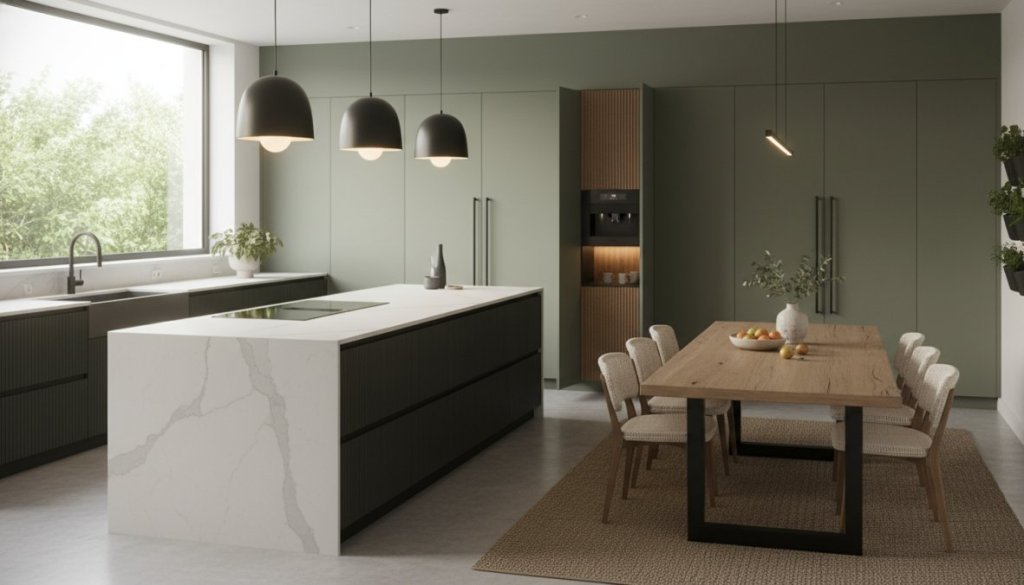
Kitchen design in 2024 moved decisively away from sterile, all-white spaces toward warmer, more textured environments that feel lived-in without looking cluttered. The defining shift was the merger of interior design ambition with functional renovation logic: homeowners stopped choosing between a beautiful kitchen and a practical one.
According to the National Kitchen and Bath Association’s design trend reporting, open concept layouts continue to dominate new build and remodel projects, but the emphasis has shifted from maximizing square footage to maximizing usability within whatever space exists.
Three trends define this era above all others: range hoods as architectural focal points, the return of warm wood tones, and flat-front cabinetry that makes even modest kitchens read as contemporary.
Range Hoods as Focal Points
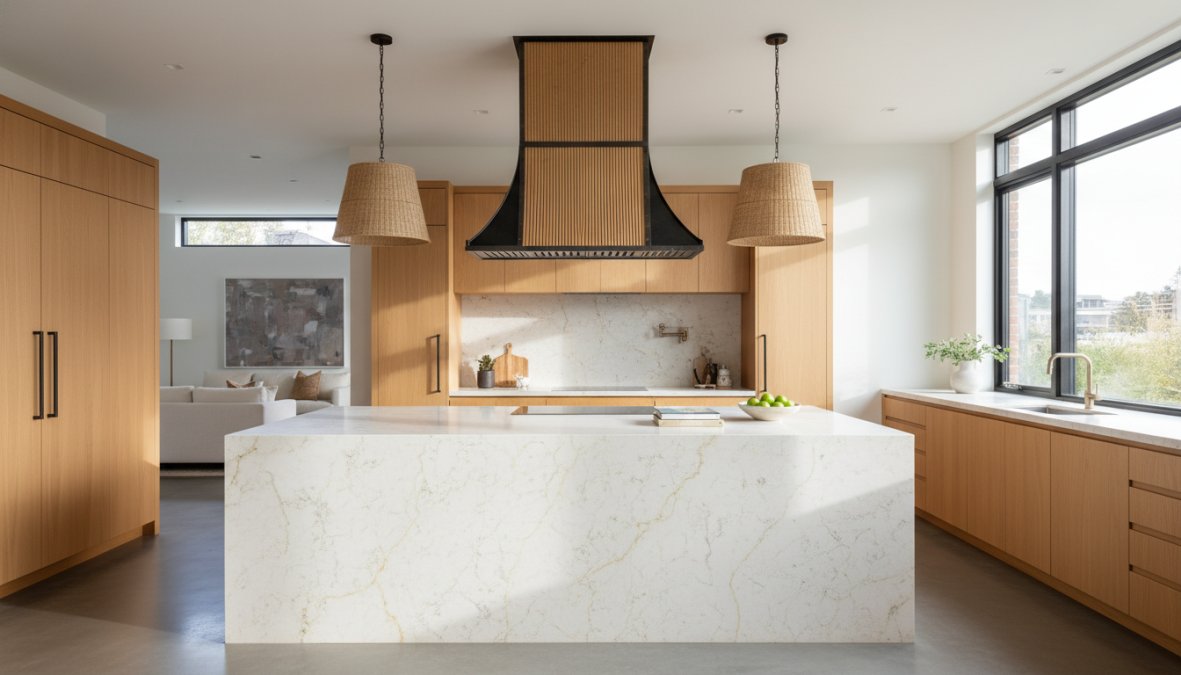
Range hoods are no longer an afterthought tucked under a cabinet. The strongest modern kitchens treat the hood as a statement piece, the same way a fireplace anchors a living room. Plaster hoods, custom wood surrounds, and sculptural metal forms have replaced the standard stainless steel box.
The practical case is equally strong. A properly sized hood improves air quality, reduces grease buildup on surfaces, and protects cabinetry. Choosing a visually interesting hood means you’re solving a real problem while adding a genuine focal point to the space.
Size the hood at least 3 inches wider than your cooktop on each side. A hood that’s too narrow is both less effective and visually awkward, which defeats the purpose of making it a statement piece.
Natural Wood Tones and Earthy Palettes
Warm woods are back, and they’re not going anywhere. White oak, walnut, and cerused wood finishes have replaced the gray-stained cabinetry that dominated the previous decade. Paired with terracotta tile, olive green accents, and stone countertops, these materials create kitchens that feel grounded rather than clinical.
The texture argument matters here. Flat, reflective surfaces read as cold under certain lighting. Warm wood tones absorb light differently, making smaller kitchens feel more inviting rather than exposing every imperfection.
Minimalist Flat-Front Cabinets and Clean Lines
Flat-front cabinets are the single most impactful upgrade for a kitchen that wants to read as contemporary. Shaker-style doors remain popular, but the cleaner aesthetic of slab-front cabinetry is what interior design professionals are specifying most frequently in high-end renovations.
The functional advantage: flat-front cabinets are easier to clean, have no recessed grooves to trap grease, and create a visual calm that makes smaller kitchens appear larger. For Norwalk homeowners working with galley layouts or compact open-plan spaces, this is one of the most cost-effective modernization moves available.
Kitchen Cabinet Color Trends 2024: Beyond White and Gray
Kitchen cabinet color trends 2024 represent a genuine departure from the safe neutrals that defined the previous decade. The palette has expanded significantly, and the homeowners who lean into color are seeing kitchens that feel distinctly personal rather than showroom-generic.
Olive Green, Terracotta, and Warm Neutrals
Olive green is the color story of this renovation cycle. It reads as sophisticated without being cold, pairs naturally with warm wood tones and brass hardware, and holds up better visually over time than trendy statement colors. Terracotta, whether on tile backsplash or as an accent on a kitchen island, adds warmth without overwhelming a space.
What makes these colors work at the renovation level is their compatibility with natural materials. Quartz countertops in warm white or cream, stone backsplash tile, and plaster wall finishes all harmonize with earthy palettes in ways that stark white cabinetry never quite achieves.
Earthy cabinet colors like olive green and warm greige are more forgiving of wear and aging than white, which shows every scuff. For high-traffic kitchens, the color choice is also a maintenance decision.
Are White Kitchens Still in Style?
White kitchens are still in style, but the all-white kitchen is losing ground. The distinction matters. White uppers paired with a warm wood lower cabinet, or white cabinetry against a terracotta tile backsplash, remains a strong design choice. The version that’s fading is the monochromatic white-on-white-on-white kitchen with no texture variation.
A common mistake is assuming that moving away from white means going bold. The most successful color transitions are subtle: a warm greige instead of a cool white, or a soft sage instead of a bright green.
Modern Kitchen Island Ideas That Maximize Function and Style
Modern kitchen island ideas have evolved far beyond the butcher block prep surface that defined the early 2000s. Today’s islands are multi-functional hubs that incorporate seating, storage, appliances, and often the most visually striking surface in the room.
Thicker Countertops and Statement Surfaces
Thicker countertops, typically 2-inch or 3-centimeter profiles, have become one of the clearest signals of a high-end kitchen renovation. The visual weight they add to an island is substantial: a thick quartz or stone slab reads as architectural rather than utilitarian.
The material choices have also expanded. Waterfall edges, where the countertop material continues vertically down the sides of the island, create a seamless look that works particularly well with marble-look quartz or natural stone. For Norwalk homeowners considering resale value, a well-specified island countertop is one of the highest-return investments in a kitchen remodel.
According to Houzz’s annual kitchen trends study, countertop upgrades consistently rank among the top five most-requested kitchen renovation features, reflecting how central the island has become to both function and aesthetic.
Beverage Centers and Coffee Stations Built Into Islands
The beverage center is the detail that separates a thoughtful kitchen renovation from a generic one. A dedicated coffee station, wine refrigerator, or beverage drawer built into the island keeps prep surfaces clear and creates a natural social hub separate from the main cooking zone.
This trend reflects a broader shift in how kitchens are used. The kitchen is now the primary entertaining space in most homes, and the island is its command center. Designing for that reality, rather than treating the kitchen purely as a cooking workspace, produces layouts that feel genuinely modern.
Smart Kitchen Appliance Features Shaping Modern Design Trends 2024
Smart appliances have matured past the novelty phase, but the category still contains a lot of marketing noise. The homeowners who get the most value from connected kitchen technology are the ones who understand exactly what they’re buying, and what they’re not.
The honest framework: smart features add genuine value when they reduce friction in tasks you do every day. They add little value when they replicate something a simple timer or a phone already does. That distinction separates a worthwhile upgrade from an expensive gimmick.
Hidden and Paneled Appliances for a Seamless Look
Paneled appliances are the design choice that most clearly separates a contemporary kitchen from a traditional one. When the dishwasher, refrigerator, and range hood blend into the cabinetry, the kitchen reads as a unified whole rather than a collection of equipment. But achieving that look requires understanding how the system actually works, because it is a system, not just a cosmetic swap.
How paneled appliances work in practice:
Panel-ready appliances are built with a recessed front frame that accepts a custom cabinet door panel, typically fabricated by your cabinetry manufacturer to match the rest of the kitchen. The panel attaches via a mounting kit specific to each appliance model. This means the appliance brand, the cabinetry brand, and the installer all need to coordinate, a detail that catches many homeowners off guard mid-project.
Key variables to confirm before specifying:
- Panel thickness tolerance: Most panel-ready dishwashers accept panels up to 3/4 inch thick. Some refrigerator models accept up to 1.25 inches. Confirm this with your cabinetry supplier before ordering.
- Handle integration: Some panel-ready models use a recessed grip cut into the panel itself; others use a separate handle that must be ordered and mounted. The handle detail is often what makes or breaks the seamless look.
- Hinge clearance: Panel-ready refrigerators require precise hinge clearance to open fully without hitting adjacent cabinetry. This is a rough-in measurement your contractor must account for before cabinet installation, not after.
For dishwashers, the Bosch 800 Series panel-ready models operate at 38-42 dBA depending on the cycle, which matters significantly in open-concept layouts where kitchen noise carries into living spaces. The panel-ready configuration is available across most of their lineup, making it accessible at multiple price points rather than only at the top tier.
For refrigeration, the integrated column format, where separate refrigerator and freezer columns are installed flush with cabinetry, is the approach most often specified in high-end renovations. It allows each column to be positioned independently, which gives designers flexibility in kitchen layouts that a standard side-by-side or French door unit cannot match.
Do not panel an appliance that generates significant heat, like a built-in oven or a warming drawer, without verifying ventilation clearances with your contractor. Inadequate airflow around paneled appliances is a common installation mistake that creates both safety and performance problems. Most manufacturers publish minimum clearance specifications in their installation guides, request these before finalizing cabinet dimensions.
The cost reality of paneled appliances:
Panel-ready appliances typically carry a modest premium over their standard-front equivalents, often in the range of 10-20% depending on the brand and model. The larger cost is the custom panel fabrication itself, which your cabinetry manufacturer will quote separately. For a full kitchen with a paneled refrigerator, dishwasher, and potentially a paneled range hood insert, the panel fabrication and installation can add meaningfully to the project budget. Get this line item quoted explicitly before finalizing your cabinetry contract.
Smart Home Integration and Connected Cooking
The smart features worth paying for in 2024 fall into three categories: remote monitoring, precision cooking control, and energy management. Features outside these categories tend to be convenience additions rather than genuine workflow improvements.
Remote monitoring has real value in specific scenarios: knowing your refrigerator door was left ajar, receiving an alert when a dishwasher cycle finishes, or checking oven status from another room. These are low-friction integrations that work reliably and solve actual problems.
Precision cooking control, induction cooktops with temperature-hold functions, steam ovens with programmable humidity levels, and ranges with integrated meat probes, adds genuine cooking capability rather than just connectivity. The Brava Smart Oven uses light-based cooking technology with an integrated camera for remote monitoring, and it replaces multiple countertop appliances with a single connected device, which directly supports the minimalist aesthetic that defines modern kitchen design. The practical value here is real: fewer appliances on the counter, more consistent cooking results.
Energy management is the underrated category. Induction cooktops use significantly less energy than gas or electric resistance burners because they transfer heat directly to the cookware rather than heating a surface first. For homeowners in Connecticut where electricity costs are above the national average, the long-term operating cost difference between induction and gas is a legitimate financial consideration, not just an environmental one.
What to skip:
Refrigerators with built-in touchscreens, voice-activated faucets, and app-controlled coffee makers that require proprietary pods or subscriptions tend to generate the most buyer’s remorse in post-renovation surveys. The common thread is that these features add interface complexity to tasks that were already simple, and they create dependency on manufacturer software ecosystems that may not be supported in five years.
When evaluating any smart appliance, ask one question: does this feature work if the app is discontinued or the Wi-Fi is down? If the answer is no and the feature is central to the appliance’s function, that is a risk worth pricing into your decision.
As Consumer Reports’ kitchen appliance coverage has consistently noted, reliability and repairability remain the top long-term satisfaction drivers for kitchen appliances, ahead of smart features. The best smart kitchen is one where the technology enhances a well-designed, durable foundation rather than substituting for it.
Sustainable Kitchen Design 2024: Eco-Friendly Materials and Practices
Sustainable kitchen design in 2024 has moved from aspiration to specification. Homeowners are asking specific questions about material sourcing, cabinetry construction, and the long-term environmental footprint of their renovation choices, and contractors are being held to answers. The good news is that the most sustainable options are frequently also the most durable and visually appealing. The challenge is knowing how to evaluate claims, because greenwashing is common in the building materials industry.
This section gives you a practical framework for making sustainable choices that hold up to scrutiny.
Cabinetry: What FSC Certification Actually Means
FSC (Forest Stewardship Council) certification is the most widely recognized standard for responsibly sourced wood products. When a cabinetry manufacturer says their product uses FSC-certified wood, it means the timber was harvested from forests managed to specific environmental and social standards, with chain-of-custody documentation at each step.
What it does not automatically mean: that the entire cabinet box is FSC-certified. Many manufacturers use FSC-certified face frames or door panels while the cabinet box itself is made from particleboard or MDF with no certification. When specifying cabinetry for a sustainable renovation, ask for FSC certification on the full cabinet construction, not just the visible wood components.
The other cabinetry variable that matters for indoor air quality is the binder used in engineered wood products. Standard particleboard and MDF use urea-formaldehyde resins that off-gas VOCs (volatile organic compounds) into the home, particularly in the first few years after installation. CARB Phase 2 compliant products, named for California Air Resources Board standards that have become the de facto national benchmark, use significantly lower-emission binders. CARB Phase 2 compliance is now a standard specification request for any kitchen renovation where indoor air quality is a priority, and most major cabinetry manufacturers offer it without a significant price premium.
When reviewing cabinetry quotes, ask specifically for CARB Phase 2 compliant cabinet boxes and confirm it in writing. This is a health and air quality decision as much as an environmental one, particularly relevant in the enclosed cooking environment of a kitchen.
Countertop Materials: Durability as Sustainability
The most sustainable countertop is often the one that lasts longest without replacement. That reframes the sustainability conversation away from material sourcing alone and toward lifecycle performance.
Quartz: Engineered quartz is approximately 90-95% crushed natural quartz bound with polymer resins. It is not a natural stone product, but it is extremely durable, non-porous, and requires no sealing. The manufacturing process is energy-intensive, but the material’s longevity, properly maintained quartz countertops can last the life of the home, offsets much of that upfront impact over time.
Recycled glass tile and countertops: Recycled glass backsplash tile and countertop surfaces made from post-consumer glass are genuinely circular products. The aesthetic has improved significantly, current recycled glass tile products are available in formats and finishes that read as high-end rather than craft-project. The trade-off is that glass countertops require more careful maintenance than quartz and can chip at edges under impact.
Natural stone: Granite and marble are natural materials with no manufacturing emissions, but quarrying and transportation carry their own environmental footprint. For homeowners prioritizing local sourcing, asking your supplier about the origin of stone slabs is a reasonable question, stone quarried domestically travels significantly fewer miles than stone imported from overseas.
Reclaimed wood: Reclaimed wood countertops and open shelving are among the most genuinely sustainable options available, using material that would otherwise be landfilled or downcycled. The practical considerations are real: reclaimed wood requires regular oiling or sealing, is not appropriate as a primary prep surface near a sink without careful finishing, and varies in availability depending on your region. For a kitchen island end panel, floating shelves, or a secondary prep surface, reclaimed wood adds both sustainability credentials and visual warmth that no manufactured material replicates.
Low-VOC Finishes: A Non-Negotiable Baseline
Low-VOC paints and finishes are now standard rather than premium at most paint retailers and cabinetry manufacturers. In a kitchen, where heat from cooking accelerates off-gassing and ventilation is often limited, the case for low-VOC finishes is both environmental and practical.
For cabinet painting projects, look for products with VOC content below 50 grams per liter for interior latex paints, which qualifies as low-VOC under most regulatory definitions. Zero-VOC products (typically under 5 g/L) are available from most major paint brands and are the appropriate specification for households with children, elderly residents, or anyone with respiratory sensitivities.
Drawers Over Cabinets: A Functional and Sustainable Choice
Drawers over lower cabinet doors is one of those trends that sounds minor until you actually live with it. The ergonomic case is overwhelming: drawers allow full visibility and access to contents without kneeling or reaching to the back of a deep shelf. Everything is accessible from a standing position, which matters for daily usability and for aging-in-place considerations.
The sustainability angle is less obvious but real. Drawers typically use less material than door-and-shelf configurations for equivalent storage volume, because the drawer box itself serves as the organizing structure without requiring additional shelf hardware. Because contents are more visible and accessible, food waste tends to decrease in kitchens where pantry storage is drawer-based, a practical sustainability benefit that compounds over years of use.
Many cabinetry manufacturers now offer drawer-dominant base cabinet configurations as a standard option rather than a custom upcharge. If you are specifying new cabinetry, requesting a drawer-dominant layout for base cabinets is one of the lowest-friction sustainable choices available: it costs no more, performs better ergonomically, and reduces material use slightly compared to door-and-shelf alternatives.
The most durable sustainable choice in a kitchen renovation is prioritizing material longevity over material origin. A quartz countertop that lasts 30 years has a lower lifecycle impact than a trendy surface material that needs replacement in 8. Sustainability and durability are the same decision when you account for the full timeline.
What Sustainable Choices Actually Cost
The persistent myth about sustainable kitchen materials is that they carry a significant premium. In practice, the cost picture is more nuanced:
- CARB Phase 2 cabinetry: Typically no premium over standard cabinetry from the same manufacturer. This is a specification request, not an upgrade tier.
- Low-VOC paint: Comparable price to standard paint at most retailers. Zero-VOC options may carry a modest premium of a few dollars per gallon.
- FSC-certified wood products: Can carry a 5-15% premium depending on species and supplier, though availability has improved as demand has grown.
- Recycled glass tile: Pricing varies widely by manufacturer and format, but mid-range recycled glass tile is competitive with mid-range ceramic or porcelain tile.
- Reclaimed wood: Pricing depends heavily on regional availability. In areas with active reclaimed lumber markets, reclaimed wood can be cost-competitive with new hardwood. In areas where it must be shipped, the cost premium can be substantial.
The practical approach for Norwalk homeowners: treat CARB Phase 2 compliance and low-VOC finishes as baseline specifications that cost nothing extra to request, and evaluate FSC certification and reclaimed materials as upgrades where budget allows and where the aesthetic aligns with the overall design direction.
Budget-Friendly DIY Modernization for Norwalk, CT Homeowners
Not every kitchen renovation requires a full remodel. For Norwalk homeowners looking to modernize without a major investment, several high-impact changes are achievable with careful planning and the right approach.
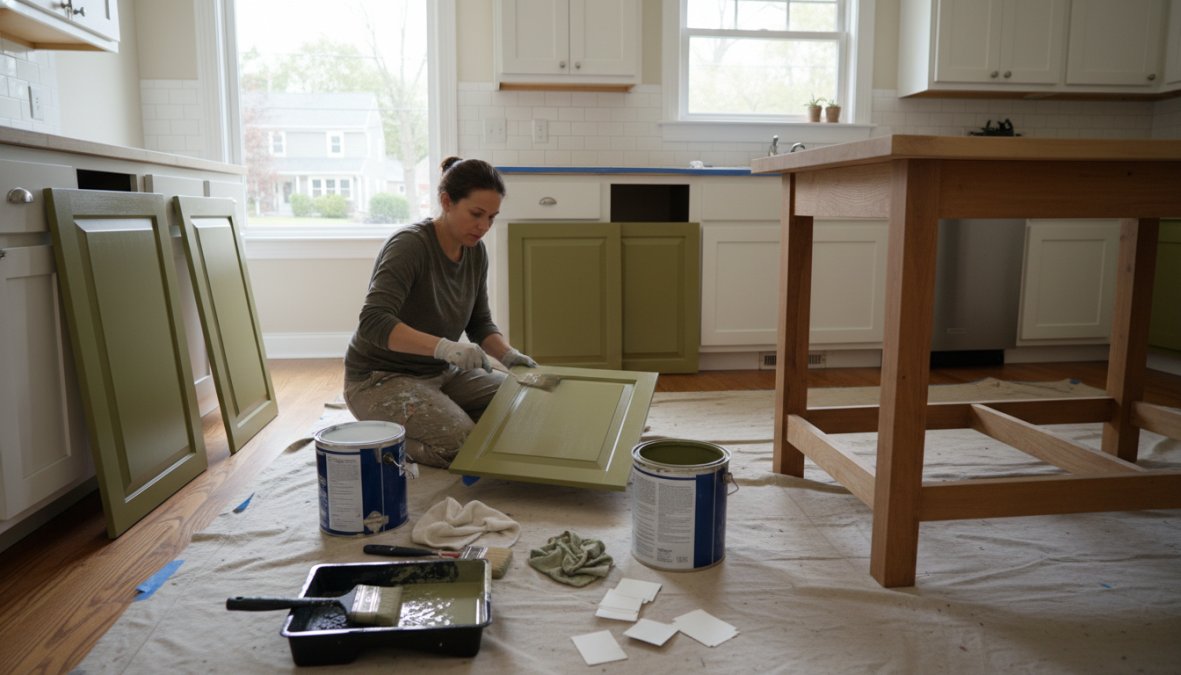
The highest-return DIY moves, in rough order of impact:
- Cabinet painting: Replacing white or outdated cabinet colors with an earthy neutral or olive green transforms the entire room. Proper prep, including cleaning, sanding, and priming, is where most DIY cabinet paint jobs succeed or fail.
- Hardware replacement: Swapping dated knobs and pulls for matte black or brushed brass hardware is a half-day project that reads as a significant aesthetic upgrade.
- Backsplash tile: Peel-and-stick geometric tiles have improved dramatically in quality and can serve as a bridge solution until a full renovation is feasible.
- Under-cabinet lighting: LED strip lighting under upper cabinets improves both the functionality and the ambiance of a kitchen at minimal cost.
- Open shelving accent: Replacing one or two upper cabinet doors with open shelving creates the airy, contemporary look associated with high-end renovations.
For planning more significant changes, tools like RoomSketcher (starting at $10/month) offer drag-and-drop layout planning with 360-degree visualization, making it accessible for homeowners who want to see changes before committing. IKEA’s free Kitchen Planner integrates directly with their product catalog and generates shopping lists, which is particularly useful for budget-focused renovations.
Small-Space Kitchen Modernization Tips
Small-space modernization is where design discipline matters most. The biggest mistake in compact kitchens is trying to do too much. Every trend that works in a large open-concept kitchen needs to be edited down for a galley or L-shaped layout.
Specific principles that work in small Norwalk kitchens:
- Use flat-front cabinetry to reduce visual noise
- Extend upper cabinets to the ceiling to maximize storage and draw the eye upward
- Choose a light countertop material, even if the cabinetry is a warm wood tone
- Install a single statement backsplash material rather than mixing textures
- Prioritize under-counter appliances and integrated storage to keep surfaces clear
The goal is a kitchen that reads as intentional, not cramped. Restraint in material choices and a clear color palette do more for a small kitchen than any individual product upgrade.
Longevity and Resale Value: Which 2024 Trends Are Worth the Investment
Not every trend earns its cost back at resale. The honest answer is that some of the most popular kitchen aesthetics right now, particularly very trend-specific color choices and novelty appliances, will date faster than their price tags justify.
The trends with the strongest longevity and resale case are:
| Trend | Resale Impact | Longevity Outlook |
|---|---|---|
| Flat-front cabinetry | High | Strong – timeless aesthetic |
| Quartz or stone countertops | High | Strong – material durability |
| Paneled appliances | High | Strong – neutral integration |
| Thicker countertop profiles | Medium-High | Strong – architectural detail |
| Beverage centers/coffee stations | Medium | Good – functional value |
| Bold cabinet colors (trendy hues) | Low-Medium | Moderate – style-dependent |
| Smart appliance integration | Medium | Good – improving with adoption |
| Sustainable materials | Medium | Growing – buyer preference increasing |
The pattern is clear: investments in materials, proportions, and functional design outperform investments in color trends and novelty features. A kitchen with well-specified cabinetry, durable countertops, and clean lines will appeal to buyers across multiple design cycles. A kitchen built around a single trending color palette will need repainting.
According to the Remodeling Magazine Cost vs. Value Report, mid-range kitchen remodels consistently return more than 60 cents on the dollar at resale, with the strongest returns coming from projects that prioritize layout and material quality over decorative finishes.
The practical takeaway for Norwalk homeowners: spend on the bones, be thoughtful about color, and treat smart appliances as a quality-of-life investment rather than a guaranteed value-add at resale.
Updating a kitchen to reflect current design standards is one of the most impactful home improvements a Norwalk, CT homeowner can make, but the execution is where most projects either succeed or fall short. Tony’s Home Improvement LLC brings meticulous attention to detail, economical sourcing of materials, and clear communication throughout every kitchen remodel, from minor cabinet updates to full structural renovations. Contact Tony’s Home Improvement LLC to discuss your kitchen project and get a clear picture of what your renovation will involve before any work begins.
Frequently Asked Questions
What are the modern kitchen design trends for 2024?
The top modern kitchen design trends for 2024 include warm wood tones and earthy color palettes like olive green and terracotta, statement range hoods, flat-front minimalist cabinetry, paneled appliances, thick quartz or stone countertops, and integrated beverage centers. There is also a strong shift toward sustainable materials and smart home-connected appliances that blend seamlessly into the overall aesthetic rather than standing out as separate gadgets.
What is the most popular kitchen cabinet color for 2024?
In 2024, warm and earthy tones are dominating kitchen cabinet color trends. Olive green, terracotta-adjacent warm neutrals, and deep navy blues are among the most sought-after choices for cabinetry. While crisp white kitchens remain a timeless option, many homeowners are moving toward richer, more personalized color palettes that add warmth and character, especially when paired with natural wood accents and stone or quartz countertop materials.
What kitchen design trends are going out of style in 2024?
Several older trends are fading in 2024. All-white, sterile kitchens with no texture or warmth are being replaced by layered, earthy palettes. Open shelving as the primary storage solution is giving way to a preference for concealed cabinetry and paneled appliances. Stark, cold stainless steel finishes are also losing ground to warmer metals like brushed brass and matte black, which better complement the natural, organic aesthetic that defines modern kitchen interior design this year.
What are the best sustainable kitchen design ideas for 2024?
Sustainable kitchen design in 2024 focuses on choosing durable, long-lasting materials like solid wood cabinetry, recycled stone countertops, and low-VOC finishes. Opting for drawers over traditional cabinets improves accessibility and reduces wasted space, extending the kitchen's useful life. Energy-efficient smart appliances, such as induction cooktops and connected dishwashers, reduce energy consumption. Sourcing materials locally, something Tony's Home Improvement LLC prioritizes in the Norwalk, CT area, also lowers the environmental footprint of any kitchen remodel.
How can I make my kitchen look modern without a full remodel?
You can achieve a modern kitchen look on a budget with targeted upgrades. Repainting or refacing cabinets in a trending color like olive green instantly refreshes the space. Swapping outdated hardware for matte black or brushed brass pulls adds a contemporary touch. Updating the backsplash with geometric tiles, adding under-cabinet lighting, and replacing a standard faucet with a sleek modern fixture are all cost-effective changes. For small-space kitchens, decluttering countertops and adding a compact beverage station can dramatically improve both function and aesthetic.
This article was written using GrandRanker
 Tony's Home Improvement LLC
Leave a comment