Table of Contents
- What This Commercial Facility Maintenance Cost Guide Covers
- Commercial Building Maintenance Cost Per Square Foot: What to Expect
- Preventive vs Reactive Maintenance Costs: Which Approach Saves More
- Key Components Every Commercial Facility Maintenance Budget Must Include
- How to Build a Facility Maintenance Budget Template Step by Step
- Facility Management Cost Reduction Strategies That Actually Work
- Inflationary and ESG Pressures Reshaping Commercial Facility Maintenance Costs
- Common Mistakes in Commercial Facility Maintenance Cost Planning
Last Updated: June 8, 2026
What This Commercial Facility Maintenance Cost Guide Covers
Most facility managers underestimate their annual maintenance spend, and the gap between budget and actual cost widens every year. This guide, developed by Tony’s Home Improvement LLC from direct experience managing commercial renovation and repair projects in Norwalk, CT, breaks down what you should expect to spend, where costs hide, and how to build a budget that holds up under scrutiny.
Commercial facility maintenance covers everything from HVAC servicing and plumbing maintenance to janitorial services, electrical systems, and landscaping. A well-maintained office building in Norwalk, CT costs very differently to operate than a warehouse, a medical facility, or a retail strip.
The sections ahead address preventive vs. reactive maintenance costs, the hidden price of deferred maintenance, technology ROI from building automation systems, vendor management through service level agreements, and how inflation and ESG pressures are reshaping commercial property management in 2026.
Commercial Building Maintenance Cost Per Square Foot: What to Expect
Commercial building maintenance cost per square foot is the most practical benchmark for setting an annual budget. It gives you a starting point for comparison, a baseline for property condition assessment, and a defensible number for ownership or finance teams.
According to BOMA International’s building operating cost resources, costs vary considerably by asset class, building age, and geographic market. Work from building-type ranges and adjust for your specific conditions.
Cost Ranges by Building Type
| Building Type | Estimated Annual Maintenance Cost Range (per sq ft) | Primary Cost Drivers |
|---|---|---|
| Class A Office | Higher end of the spectrum | HVAC servicing, janitorial, elevators |
| Class B/C Office | Moderate | Aging systems, deferred maintenance catch-up |
| Retail/Strip Mall | Moderate | Tenant turnover, common area upkeep |
| Light Industrial/Warehouse | Lower end | Simpler mechanical systems |
| Medical/Healthcare | Highest | Compliance checks, specialized equipment |
| Mixed-Use | Variable | Depends on residential vs. commercial mix |
The absence of precise dollar figures is intentional. Fabricating a number would be worse than acknowledging that actual cost per square foot depends on the factors below.
Factors That Shift Your Cost Per Square Foot
- Building age: Older structures carry higher deferred maintenance risk and more frequent emergency repairs
- Asset lifecycle management: Properties with documented replacement schedules spend less on reactive work
- Climate: Norwalk, CT winters create specific demands on HVAC, roofing, and exterior plumbing that warmer markets do not face
- Occupancy type: High-traffic retail or medical facilities wear faster than low-density office space
- Utility management: Buildings without energy management controls often see inflated operating costs
- Compliance requirements: Regulated industries face mandatory compliance checks that add to baseline spend
Request a property condition assessment from a licensed inspector before finalizing your first-year maintenance budget. It surfaces deferred maintenance items that will become emergency repairs if left unaddressed and gives you a defensible capital expenditure (CapEx) plan.
Preventive vs Reactive Maintenance Costs: Which Approach Saves More
Preventive maintenance consistently costs less over time than reactive maintenance. Reactive maintenance keeps short-term costs low on paper but creates unpredictable spikes from emergency repairs, accelerated asset degradation, and tenant satisfaction problems that drive lease turnover. A well-executed preventive program catches a failing HVAC compressor before it fails mid-July and a plumbing leak before it becomes a water damage claim.
Predictive maintenance goes further, using sensor data and building automation systems to trigger maintenance only when asset performance signals a problem. The technology investment is higher, but so is the precision.
The Hidden Price of Deferred Maintenance
Deferred maintenance is the most expensive line item most facility managers never see on their budget. According to the Facilities Management Journal’s guidance on deferred maintenance, it compounds over time as minor issues become structural problems. A roof inspection deferred for two years does not cost twice as much to address, it often costs four to six times more once water intrusion has damaged insulation, structural decking, or interior finishes.
A common mistake is treating deferred maintenance as a budget win. It is a liability transfer, not a saving.
Key Components Every Commercial Facility Maintenance Budget Must Include
A complete facility maintenance budget accounts for every system category affecting building performance, safety, and compliance. Facility managers who underbudget typically do so by omitting categories they consider infrequent, not by mispricing the ones they include.
HVAC Servicing and Mechanical Systems
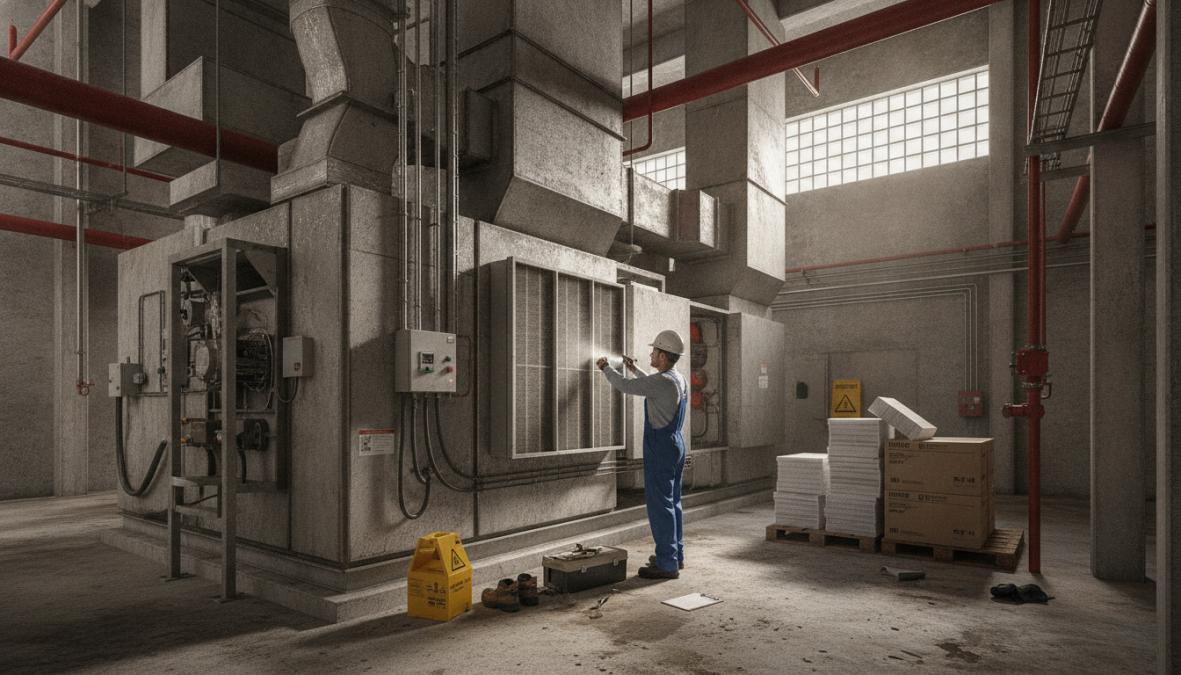
HVAC servicing is typically the largest single line item in a commercial facility maintenance budget. Scheduled filter replacements, coil cleanings, refrigerant checks, and belt inspections are the minimum required to avoid premature compressor failure and maintain energy efficiency.
Buildings in Norwalk, CT face genuine seasonal demand swings, heating systems run hard from November through March, cooling from June through September. A preventive maintenance contract covering both seasons is the baseline. Mechanical systems beyond HVAC, elevators, fire suppression, and building automation systems, each carry their own inspection schedules and compliance requirements.
Electrical Systems, Plumbing Maintenance, and Safety Protocols
Electrical systems and plumbing maintenance are often underfunded because failures are less frequent than HVAC issues, but when failures occur, they tend to be serious. Electrical maintenance covers panel inspections, breaker testing, emergency generator testing, and compliance checks against local code. In Connecticut, commercial properties face specific inspection requirements that carry legal liability if ignored. Plumbing maintenance includes backflow preventer testing, water heater servicing, and drain line inspections.
Skipping annual compliance checks on fire suppression or electrical systems is not a budget strategy. It is a liability exposure that can void insurance coverage and result in code violations. Budget for these items as fixed costs, not discretionary ones.
Janitorial Services, Landscaping, and Waste Management
Janitorial services, landscaping, and waste management are the most visible maintenance categories to tenants and directly affect lease renewal rates. Janitorial scope should reflect square footage, occupancy density, and cleaning frequency, a shared office with 200 daily occupants requires a fundamentally different contract than a warehouse with 10 staff.
Landscaping in Norwalk, CT means seasonal contracts covering spring planting through winter snow removal. Snow removal is a separate line item many Connecticut property owners underestimate in light-winter years and regret in heavy ones. Waste management costs vary by municipality and waste stream, with regulated waste carrying higher disposal costs.
How to Build a Facility Maintenance Budget Template Step by Step
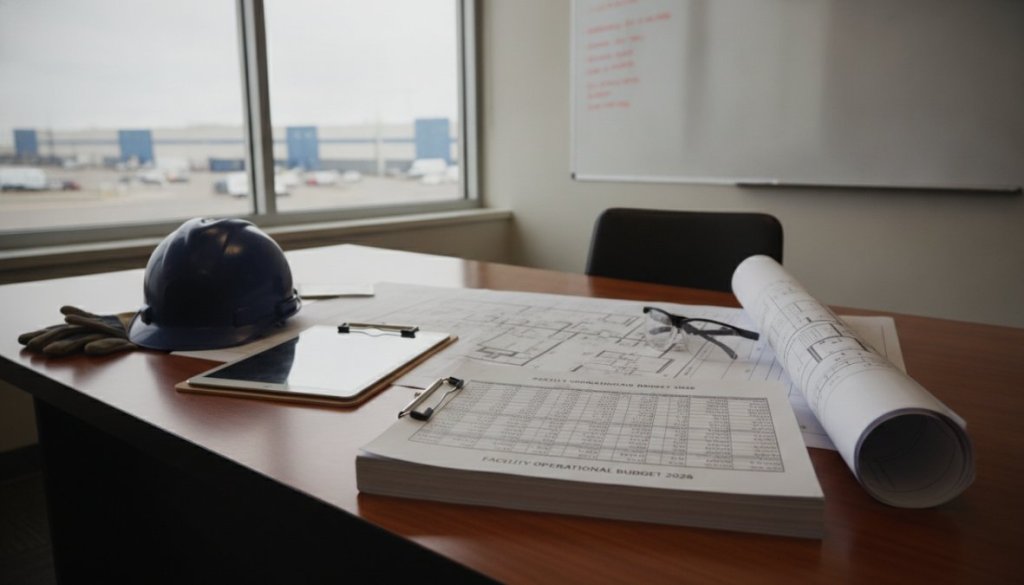
Building a facility maintenance budget template takes an afternoon to set up and saves months of reactive scrambling. The goal is a living document that separates OpEx from CapEx, accounts for seasonal variation, and gives stakeholders a clear picture of where money is going.
Follow these steps:
- Inventory every building system. List HVAC units, electrical panels, plumbing systems, elevators, roofing, and specialty systems. Include installation year and expected remaining useful life.
- Assign a maintenance category to each system. Preventive (scheduled), predictive (condition-based), or reactive (as-needed). Most systems should sit in the preventive column.
- Pull the last 24 months of actual spend. Work order records, vendor invoices, and utility bills give you the baseline. If records are incomplete, a property condition assessment fills the gap.
- Separate CapEx from OpEx. Repairs that restore existing function are OpEx. Replacements that extend useful life or upgrade capability are CapEx. This distinction matters for tax treatment and stakeholder reporting.
- Build in a contingency reserve. Many experienced facility managers hold 10-15% of total maintenance budget for emergency repairs, depending on building age and system condition.
- Schedule quarterly reviews. A budget built in January needs to reflect reality in October. Quarterly reviews catch seasonal variances and allow reallocation before year-end surprises.

Separating CapEx from OpEx in Your Maintenance Plan
The CapEx vs. OpEx distinction affects how costs appear on financial statements, tax treatment, and how ownership evaluates property performance.
Operating expenditure (OpEx) covers routine maintenance, repairs, and service contracts, HVAC filter replacements, janitorial services, landscaping, and minor plumbing repairs.
Capital expenditure (CapEx) covers replacements and improvements that extend asset life or add capability, a full HVAC system replacement, roof replacement, or electrical panel upgrade.
The line is not always obvious. A partial roof repair that restores existing function is OpEx; a full replacement that extends useful life by 20 years is CapEx. When in doubt, consult your accountant and document the reasoning.
Facility Management Cost Reduction Strategies That Actually Work
The most effective facility management cost reduction strategies are about spending more precisely, not cutting maintenance. Cutting maintenance generates deferred maintenance liability that costs more to resolve later. What actually moves the needle:
- Consolidate vendor relationships to negotiate volume pricing
- Shift reactive spend to preventive contracts, particularly for HVAC servicing
- Conduct annual utility management reviews to identify energy waste
- Use work order management software to track response times and identify recurring failures
- Benchmark your cost per square foot against comparable properties annually
Technology ROI: Building Automation and Facility Maintenance Software
Building automation systems (BAS) integrate HVAC, lighting, access control, and energy management into a single platform, enabling automated scheduling, remote monitoring, and fault detection. Savings come from reduced energy consumption, fewer emergency repairs from undetected faults, and lower labor costs from automated scheduling.
Facility maintenance software handles work order management, preventive maintenance scheduling, vendor tracking, and compliance documentation. According to Gartner’s analysis of facility management technology adoption, organizations that implement dedicated facility management platforms report measurable improvements in scheduling compliance and cost visibility.
The practical advice: do not buy enterprise facility maintenance software for a single building. For portfolios of three or more properties, or large single assets above 100,000 square feet, the investment typically pays back within two to three years.
Building automation systems reduce energy and reactive maintenance costs, but the ROI case depends on building size and current energy spend. Run the numbers on your specific asset before committing to a BAS installation.
Vendor Management and Service Level Agreements
Vendor management is where many facility maintenance budgets quietly leak money, not through overpaying on individual invoices, but through duplicate work, missed preventive visits, slow emergency response, and scope creep on time-and-materials contracts. Service level agreements (SLAs) are the fix. A well-written SLA defines response time commitments, preventive maintenance schedules, escalation procedures, and performance metrics.
For Norwalk, CT commercial properties, local vendor relationships matter. A regional HVAC contractor familiar with Connecticut’s climate, code requirements, and supply chains will outperform a national provider with longer lead times and less local familiarity.
Negotiate SLAs that include:
- Maximum response times for emergency repairs (typically 2-4 hours for critical systems)
- Defined preventive maintenance visit frequency and scope
- Documentation requirements for all work performed
- Price escalation caps tied to a published index
Inflationary and ESG Pressures Reshaping Commercial Facility Maintenance Costs
Two forces are fundamentally changing the commercial facility maintenance cost landscape in 2026 that most pre-2023 guides do not address.
The first is inflation’s persistent impact on labor and materials. Skilled trades labor costs have risen significantly across the Northeast, with HVAC technicians, licensed electricians, and plumbers in short supply relative to demand. Maintenance contracts negotiated two or three years ago are likely underpriced, and vendors are seeking renegotiation.
The second is ESG pressure. Corporate tenants increasingly require landlords to demonstrate energy efficiency and sustainability credentials. LED lighting upgrades, low-flow plumbing fixtures, and high-efficiency HVAC equipment are now baseline expectations in competitive lease markets. According to ENERGY STAR’s commercial building energy resources, buildings that achieve energy certification typically command premium rents and experience lower vacancy rates.
The interaction most guides miss: inflation raises the short-term cost of sustainability upgrades, but long-term OpEx savings from efficient systems make the investment more defensible, not less, in an inflationary environment.
Common Mistakes in Commercial Facility Maintenance Cost Planning
The same mistakes appear repeatedly across commercial property management regardless of building type or market.
Treating maintenance as a variable cost to cut in tight years. Maintenance is closer to a fixed obligation than a discretionary expense. Cutting it defers costs rather than eliminating them, and deferred costs compound.
Failing to separate CapEx from OpEx in budget planning. This obscures true operating performance and creates surprises at tax time and during property valuation.
Ignoring asset lifecycle management. Buildings without documented replacement schedules face unpredictable capital calls. A rooftop HVAC unit installed in 2010 is likely approaching end of useful life, that replacement belongs in the CapEx plan now, not as an emergency in two years.
Underestimating tenant satisfaction costs. Deferred maintenance and slow emergency repair response directly affect tenant retention. Lease turnover carries substantial costs in lost rent, leasing commissions, and tenant improvement allowances.
Over-relying on a single vendor without SLA accountability. Without documented service level agreements, there is no baseline for performance evaluation and no contractual recourse when response times or quality fall short.
Skipping the property condition assessment. The most common reason facility maintenance budgets fail in year one is that they were built without a current baseline. A property condition assessment surfaces deferred maintenance before it becomes an emergency.
Managing commercial facility maintenance costs requires disciplined planning, accurate baselines, and the willingness to invest in preventive work before systems fail. Tony’s Home Improvement LLC brings the same meticulous attention to detail and cost-effective approach to commercial maintenance projects in Norwalk, CT that it applies to every renovation and repair engagement. From HVAC-related structural repairs to electrical and plumbing modifications, the team delivers high-quality results with clear communication and efficient project execution. Contact Tony’s Home Improvement LLC to discuss your commercial facility’s maintenance and renovation needs.
Frequently Asked Questions
What is the average commercial building maintenance cost per square foot?
Commercial building maintenance costs generally range from $1.50 to $4.00 per square foot annually, though this varies widely by building type, age, location, and systems complexity. Older buildings with aging infrastructure tend to sit at the higher end of that range. Office buildings, retail spaces, and industrial facilities each carry different baseline costs. Using this range as a starting point in your commercial facility maintenance cost guide helps you set realistic budget expectations before conducting a formal property condition assessment.
How do you calculate a facility maintenance budget?
A practical starting point is to allocate 2-4% of your building's replacement value annually toward maintenance. From there, break spending into categories: HVAC servicing, plumbing maintenance, electrical systems, janitorial services, landscaping, and emergency repairs. Separate capital expenditure (CapEx) from operating expenditure (OpEx) to keep your facility maintenance budget template accurate. Review work order management data from prior years to identify recurring cost drivers and adjust allocations accordingly each budget cycle.
What is the difference between preventive and reactive maintenance costs?
Preventive maintenance involves scheduled inspections and upkeep to catch issues early, typically costing less per incident than reactive repairs. Reactive maintenance, also called emergency repairs, occurs after a failure and often carries higher labor rates, rush material costs, and downtime losses. A strong preventive vs reactive maintenance strategy targets roughly 80% planned work to 20% reactive, which helps facility managers reduce total spend, extend asset lifecycle, and improve tenant satisfaction over time.
What are the most effective facility management cost reduction strategies?
The most impactful facility management cost reduction strategies include adopting facility maintenance software for work order management, negotiating service level agreements with vendors to lock in rates, transitioning from reactive to preventive maintenance, and investing in building automation systems for energy management. Sustainability upgrades, such as LED lighting and smart HVAC controls, also reduce utility costs over time. Regularly reviewing vendor contracts and conducting property condition assessments helps identify deferred maintenance before it becomes a costly emergency repair.
How are inflation and ESG requirements affecting commercial facility maintenance costs?
Rising labor and material costs driven by inflation have increased maintenance budgets noticeably in recent years, making vendor management and long-term service contracts more valuable. At the same time, ESG (Environmental, Social, and Governance) expectations are pushing commercial property management toward energy-efficient upgrades and sustainable waste management practices. While these improvements carry upfront costs, they can lower operational expenditure over the long term and improve asset value, tenant satisfaction, and compliance with evolving building regulations.
This article was written using GrandRanker
 Tony's Home Improvement LLC
Leave a comment