
Table of Contents
- Start Your Search: How to Find Reliable Home Contractors
- How to Check a Contractor License and Verify Insurance
- Contractor Reference Check Questions You Should Always Ask
- Questions to Ask Home Contractors Before Signing Anything
- Get Multiple Estimates and Understand the Written Contract
- How to Spot a Bad Contractor: Red Flags to Watch For
- Check Business Reputation, BBB Ratings, and Online Reviews
- Post-Project Dispute Resolution and Warranty Protection
- Conclusion: Hiring a Reliable Contractor Starts with Due Diligence
Last Updated: May 16, 2026
Start Your Search: How to Find Reliable Home Contractors
Knowing how to find reliable home contractors is one of the most financially consequential decisions a homeowner makes, and most people go into it completely underprepared. Hiring the wrong contractor can cost thousands in repairs, delays, and legal headaches. At Tony’s Home Improvement LLC, we’ve worked alongside homeowners navigating exactly this process, and the patterns of what goes wrong are remarkably consistent. Below, we’ll show you exactly how to vet, hire, and protect yourself when bringing a contractor onto your property.
Here’s what most guides get wrong: they treat contractor vetting as a checklist you run through once. The reality is that reliable contractor hiring is a continuous process from the first recommendation to the final payment. A contractor who looks perfect on paper can still deliver subpar workmanship if you haven’t established clear expectations, a written contract, and a structured payment schedule.
The good news is that the process is learnable. The five core stages we cover, which include sourcing candidates, verifying credentials, checking references, negotiating contracts, and protecting yourself post-project, give you a repeatable framework for every home improvement or remodeling project you’ll ever undertake.
Ask for Personal Recommendations First
Personal recommendations remain the most reliable starting point when searching for trustworthy contractors. A neighbor who recently completed a kitchen remodel or a friend who hired a general contractor for structural work has firsthand knowledge that no review site can replicate. They can tell you whether the contractor showed up on time, how the team handled unexpected problems, and whether the final result matched the original scope of work.
Ask specifically about the type of project you’re planning. A contractor who excels at bathroom remodels may not have the same depth of experience in complex structural renovations. When gathering recommendations, ask:
- Was the project completed on or near the agreed timeline?
- Did the final cost match the original estimate?
- How did the contractor communicate during the project?
- Would you hire them again without hesitation?
That last question is the most revealing. People are polite about mediocre work, but they rarely recommend contractors they’d hire again unless the experience was genuinely positive.
Use Digital Vetting Tools and Apps
Personal recommendations give you a starting list. Digital tools help you validate it. Several platforms exist specifically to help homeowners find pre-screened, vetted contractors for residential and commercial renovation work.
According to the Better Business Bureau’s contractor vetting resources, checking a contractor’s business profile before hiring provides insight into complaint history, resolution patterns, and accreditation status. Beyond the BBB, platforms like Houzz, Angi, and the National Association of Home Builders’ member directory allow homeowners to filter contractors by specialty, location, and verified reviews.
A practical approach: cross-reference any recommended contractor across at least two platforms. A contractor with strong word-of-mouth referrals AND a clean digital profile is far more trustworthy than one who exists only in one channel. Pay attention to how contractors respond to negative reviews. A professional response to criticism signals maturity and accountability.
How to Check a Contractor License and Verify Insurance
Verifying a contractor’s license and insurance is non-negotiable before signing anything. A licensed contractor has met the minimum competency standards set by your state or municipality. An insured contractor protects you from financial liability if a worker is injured on your property or if the work causes damage.

License verification is straightforward. Most states maintain an online database where you can search by contractor name or license number. If a contractor resists providing their license number or claims the work "doesn’t require a license," treat that as a serious red flag.
Confirming Liability Insurance and Workers Compensation
A reliable contractor carries two types of insurance: general liability insurance and workers compensation coverage. General liability insurance covers property damage caused by the contractor’s work. Workers compensation covers injuries sustained by workers on your property during the project.
Ask for certificates of insurance directly from the contractor, then call the insurance provider to confirm the policy is active and the coverage amounts are adequate for your project. Many homeowners skip this step and assume the certificate is legitimate. It takes five minutes and can save you from a lawsuit.
According to the Insurance Information Institute’s guidance on contractor insurance, homeowners can be held liable for injuries that occur on their property if the contractor doesn’t carry workers compensation. That liability can extend to your homeowner’s insurance policy.
Checking with Your Local Building Department
Your local building department is an underused resource. Many renovation and remodeling projects require building permits, and the permit process exists to ensure work meets local safety codes. A contractor who pulls permits is accountable to inspections at multiple project stages.
Ask your contractor directly: "Will you pull the necessary permits for this project?" A trustworthy contractor will say yes without hesitation. One who suggests skipping permits to "save money" is putting you at risk. Unpermitted work can complicate home sales, void insurance claims, and require costly demolition and rebuilding to bring the property up to code.
Never allow a contractor to work without the required permits. If unpermitted work is discovered during a home sale or insurance claim, the financial and legal consequences fall entirely on the homeowner, not the contractor.
Contractor Reference Check Questions You Should Always Ask
Checking references is where many homeowners get lazy, and it’s one of the most reliable ways to separate trustworthy contractors from problematic ones. A contractor reference check should feel like a structured interview, not a quick courtesy call.
Request at least three references from projects completed in the past 12 to 18 months. Older references are less useful because they don’t reflect the contractor’s current team, subcontractors, or business practices. When you speak with references, use these specific contractor reference check questions:
- What was the scope of the project, and was it completed as described?
- Were there any unexpected cost increases? How were they handled?
- Did the contractor communicate proactively or only when you reached out?
- How did the crew treat your property during the project?
- Were subcontractors used, and were they professional?
- Was the workmanship quality what you expected?
- Did the contractor provide a warranty on the work?
- Is there anything you wish you had known before hiring them?
The eighth question tends to generate the most honest answers. People rarely volunteer problems unless asked directly.
Ask to see photos of the completed project if possible. Many satisfied homeowners are happy to share them, and seeing actual workmanship from a past project gives you a clearer picture than any written review.
Questions to Ask Home Contractors Before Signing Anything
Questions to ask home contractors before signing a contract fall into two categories: project-specific questions and business-practice questions. Both matter equally.
On the business side, ask:
- Are you licensed and insured in this state? (Confirm the answer independently.)
- Who will be on-site daily, you or a crew supervisor?
- Will you use subcontractors, and can I meet them before work begins?
- How do you handle disputes if the work doesn’t meet expectations?
- What does your warranty cover, and for how long?
A contractor who answers these questions confidently and without defensiveness is demonstrating professionalism. One who deflects, minimizes, or becomes irritated is showing you exactly how they’ll handle problems mid-project.
Defining Scope of Work, Project Timeline, and Materials
The scope of work is the foundation of every successful construction project. Before signing a contract, the scope should be written, specific, and agreed upon by both parties. Vague language like "kitchen renovation" is not a scope. A proper scope specifies which cabinets are being replaced, which appliances are included, which materials will be used, and what the finished result should look like.
The project timeline should include a start date, key milestones, and a projected completion date. Delays happen in construction, but a contractor without a timeline is a contractor without accountability.
Materials deserve particular attention. Specify brand names, model numbers, and grades wherever possible. A contractor who quotes "standard tile" can install anything from high-quality porcelain to cheap ceramic and claim they delivered what was promised. The more specific the materials section of your contract, the less room there is for misinterpretation.
Get Multiple Estimates and Understand the Written Contract
Getting multiple estimates is standard advice, but most homeowners don’t know how to compare them properly. The goal isn’t to find the lowest price. The goal is to understand what each estimate includes and why the numbers differ.
Request at least three estimates for any significant home improvement or remodeling project. When comparing, look at:
| Estimate Component | What to Compare |
|---|---|
| Labor costs | Hourly rate vs. flat fee; who performs the work |
| Materials | Brands, grades, quantities specified |
| Timeline | Start date, milestones, completion date |
| Payment structure | Deposit amount, milestone payments, final payment |
| Warranty | Coverage duration and what’s included |
| Permits | Who pulls them and who pays for them |
A significantly lower estimate often means something is missing, whether that’s insurance coverage, quality materials, or the permit fees. Ask each contractor to walk you through their estimate line by line. The ones who can explain every item clearly are the ones worth hiring.
Payment Schedule Best Practices: Deposits, Milestones, and Final Payment
Payment schedule structure is one of the most important protections a homeowner has, and most guides barely mention it. The payment schedule is your primary financial use throughout the project.
A reasonable payment structure for most remodeling projects follows this pattern:
- Deposit: No more than 10-15% of the total project cost, paid at contract signing. Be cautious of any contractor requesting 30-50% upfront.
- Milestone payments: Tied to specific, verifiable project milestones (framing complete, rough electrical done, tile installed). Never pay for a milestone until you’ve confirmed the work is complete.
- Final payment: Held until the project passes final inspection and you’ve verified all punch-list items are resolved. The final payment should represent a meaningful portion of the total, typically 10-15%.
According to the Federal Trade Commission’s guidance on home improvement scams, paying too much upfront is one of the most common ways homeowners lose money to unreliable contractors. A contractor who insists on large upfront payments before work begins is a financial risk regardless of how professional they appear.
Never release the final payment until you have received all warranties in writing, confirmed all permits have been closed, and verified that all subcontractors have been paid. Unpaid subcontractors can file liens against your property even after you’ve paid the general contractor in full.
How to Spot a Bad Contractor: Red Flags to Watch For
Spotting a bad contractor before you hire them is far better than dealing with the consequences afterward. Most red flags appear early in the process, during the estimate phase or the initial conversation.
Watch for these warning signs:
- Pressure to decide immediately: Legitimate contractors don’t manufacture urgency. "This price is only good today" is a sales tactic, not a business practice.
- No physical address or local presence: A contractor with only a cell phone number and no verifiable local address is harder to track down if problems arise.
- Unusually low bid: A bid significantly below market rate usually means corners will be cut on materials, labor, or both.
- Cash-only payment requests: Legitimate contractors accept checks or electronic payments. Cash-only requests make disputes nearly impossible to resolve.
- Reluctance to provide a written contract: Any contractor who wants to work on a handshake is a contractor who wants to avoid accountability.
- No references or references who can’t be verified: If a contractor provides references but the phone numbers are disconnected or the people don’t recall the project, treat it as fabricated.
- Requests to pull permits in your name: This shifts all legal liability to you. A licensed contractor pulls their own permits.
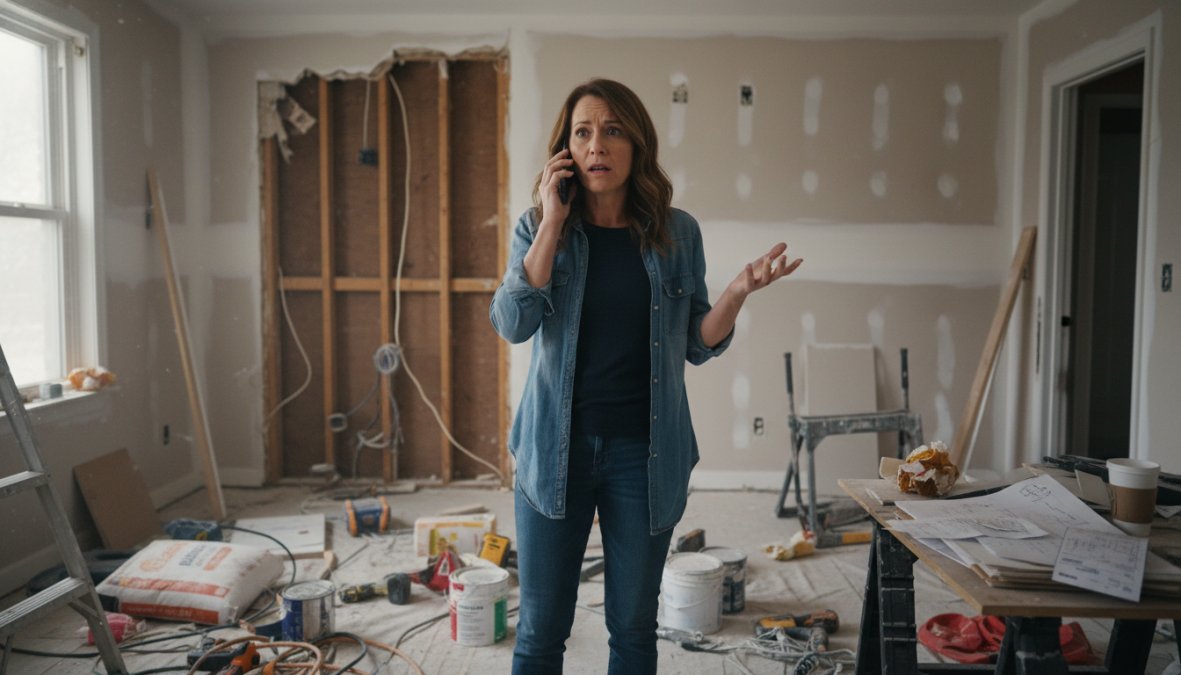
The most dangerous contractors aren’t the ones who seem obviously sketchy. They’re the ones who present professionally but resist the specific verification steps outlined in this guide. Trust the process, not the presentation.
Check Business Reputation, BBB Ratings, and Online Reviews
Business reputation research should happen before you contact a contractor, not after. But most homeowners approach this step the same way they’d browse a restaurant, they glance at the star rating and move on. That approach misses the signals that actually predict contractor reliability. Here is how to read reputation data the way a professional would.
How to Read a BBB Profile Beyond the Letter Grade
A contractor’s BBB rating reflects complaint volume, complaint resolution, and whether the business has responded to the BBB’s requests for information. An A+ rating is a positive signal, but it is not a guarantee of quality, it is a measure of responsiveness to a specific oversight body. What matters more than the letter grade:
- Complaint pattern: One complaint about a billing dispute in three years is normal. Three complaints in 18 months about incomplete work or abandoned projects is a pattern. Read the complaint text, not just the resolution status.
- Resolution quality: A complaint marked "resolved" means the contractor responded, it does not mean the homeowner was satisfied. Look for complaints where the resolution notes indicate the homeowner accepted the outcome versus ones that were closed administratively.
- Years in business vs. complaint volume: A contractor with 15 years in business and four complaints has a different risk profile than a two-year-old company with the same number.
- Accreditation status: BBB accreditation requires an annual fee and a commitment to their standards. It is a mild positive signal, not a vetting certification.
Search the contractor’s business name AND the owner’s personal name if you can find it. Some contractors close a business with a problematic history and reopen under a new name. The owner’s name is the thread that connects them.
Platform-by-Platform Evaluation Guide
Different review platforms have different verification standards and different user bases. Cross-referencing across at least three platforms gives you a more complete picture than any single source.
| Platform | Verification Standard | Best Used For | Watch Out For |
|---|---|---|---|
| Google Reviews | Requires a Google account; no project verification | Volume of reviews; recent activity | Easy to game with fake accounts; look for reviewer profiles with review history |
| Houzz | Project photos tied to reviews; contractor can respond | Seeing actual workmanship alongside reviews | Contractors curate which projects appear; absence of certain project types may be intentional |
| Angi (formerly Angie’s List) | Verified homeowner reviews on paid tier; screened contractors | Specialty-specific ratings; background check status | Contractors pay for placement; "highly rated" badges reflect advertising spend as well as quality |
| Thumbtack | Review tied to a booked job | Finding newer contractors with less established history | Smaller review volume makes individual reviews more influential; read carefully |
| Yelp | Account-based; algorithm filters suspected fake reviews | Spotting patterns in negative reviews | Yelp’s filter can suppress legitimate negative reviews; click "not recommended" reviews to see them |
When reading negative reviews on any platform, look for the contractor’s response. A contractor who responds to a one-star review by explaining what happened, acknowledging the problem, and describing how it was resolved is demonstrating exactly the accountability you want during a project. A contractor who responds defensively, attacks the reviewer, or ignores negative reviews entirely is showing you their conflict resolution style.
How to Detect Review Manipulation
Fake reviews are a real problem in the home services industry. Several patterns suggest a review profile has been artificially inflated:
- Burst of reviews in a short window: Ten five-star reviews posted within two weeks, followed by months of silence, suggests a coordinated effort rather than organic customer feedback.
- Generic language with no project specifics: Legitimate reviews typically mention the type of work done, a specific crew member’s name, or a detail about the project. Reviews that say only "great work, highly recommend" with no specifics are lower-value signals.
- Reviewer profiles with no other review history: On Google and Yelp, you can click a reviewer’s profile. An account created to leave one review and never used again is a weak signal.
- Identical phrasing across reviews: If multiple reviews use the same unusual phrase or sentence structure, they may have been written by the same person or generated from a template.
Professional Association Membership as a Supplementary Signal
Check whether the contractor is a member of professional associations like the National Association of Home Builders or the National Association of the Remodeling Industry. Membership requires dues and, in some cases, adherence to a code of ethics. It is not a guarantee of quality, but it signals a contractor who takes their professional standing seriously enough to maintain it, and who has something to lose if they behave badly.
For specialty trades, look for trade-specific certifications: a roofing contractor who holds a manufacturer’s certification (such as GAF Master Elite or CertainTeed ShingleMaster) has met training standards set by the material supplier and typically has access to extended warranty programs that unlicensed installers cannot offer their customers.
Reputation research is not about finding a contractor with a perfect record, it is about identifying patterns. A contractor with one resolved complaint and a professional response history is often more trustworthy than one with zero reviews and no verifiable track record. The goal is enough data points across enough independent sources to see who this contractor actually is when things go wrong.
Post-Project Dispute Resolution and Warranty Protection
Most contractor hiring guides end at the contract-signing stage. That is exactly where homeowners are most financially exposed. Post-project disputes are more common than most people expect, and the options available to you, and how effective they are, depend almost entirely on decisions you made before the project started. This section covers what to do when things go wrong, and the pre-completion steps that determine whether you have leverage when they do.
Before You Release Final Payment: The Pre-Closeout Checklist
The final payment is your most powerful negotiating tool. Once it is released, your leverage drops significantly. Do not release it until every item on this checklist is complete:
- Punch list sign-off: Walk the project with the contractor and document every incomplete or unsatisfactory item in writing. Agree on a deadline for each item before releasing any portion of the final payment.
- Permit closure confirmation: Ask the contractor to provide documentation that all required permits have been closed and final inspections have passed. An open permit is a legal liability that transfers to you at sale.
- Lien waivers from subcontractors and suppliers: This is the step most homeowners skip and later regret. A general contractor can accept your final payment and fail to pay their subcontractors or material suppliers. Those parties can then file a mechanic’s lien against your property, a legal claim that can complicate or block a future home sale, even though you paid the general contractor in full. Before releasing final payment, request a conditional lien waiver from the general contractor and, for larger projects, from any major subcontractors or suppliers. Many states have standardized lien waiver forms; your state’s contractor licensing board website is a good place to find them.
- Warranty documentation in writing: Verbal warranties are nearly impossible to enforce. Confirm that the written warranty specifies what is covered (labor, materials, or both), the duration, and the process for filing a claim.
- As-built documentation: For any project involving structural work, electrical, or plumbing, ask for as-built drawings or photos showing what is inside the walls before they were closed. This information is invaluable for future renovations or insurance claims.
In most states, a subcontractor or material supplier has the right to file a mechanic’s lien against your property for unpaid work even if you paid the general contractor in full. Lien rights and deadlines vary by state, but the risk is real. Lien waivers are your primary protection. If your contractor resists providing them, treat that resistance as a serious red flag.
If the Work Is Substandard: A Step-by-Step Response
Discover a problem after the project is complete? The sequence in which you respond matters as much as the response itself.
Step 1: Document everything before touching it.
Photograph and video the defect in detail before any remediation attempt. Date-stamp your documentation. If the problem is structural or involves a safety hazard, note the date you discovered it. This documentation is the foundation of any formal complaint or legal action.
Step 2: Send a written notice to the contractor.
Do not rely on phone calls. Send a written notice, email is acceptable and creates a timestamp, describing the specific defect, referencing the relevant section of your contract, and requesting a written response within a defined timeframe (ten to fourteen business days is reasonable). Keep the tone factual, not emotional. You are creating a paper trail.
Step 3: Allow a reasonable opportunity to cure.
Most states require homeowners to give contractors a reasonable opportunity to correct defective work before pursuing legal remedies. Skipping this step can weaken your legal position. If the contractor agrees to return and fix the problem, document the repair attempt and its outcome.
Step 4: Escalate if the contractor is unresponsive or refuses.
If direct communication fails, you have several escalation paths:
-
State contractor licensing board complaint: Most boards have a formal complaint process and the authority to investigate, impose fines, and in serious cases suspend or revoke a contractor’s license. This is often the most effective lever for licensed contractors because their license is their livelihood. Find your state board through the National Association of State Contractors Licensing Agencies.
-
BBB complaint: Filing a formal BBB complaint creates a public record and often prompts a response from contractors who actively manage their rating. It is most effective for contractors who rely on their BBB profile for new business.
-
State attorney general consumer protection division: Most states have a consumer protection office that handles contractor fraud complaints. If the contractor took payment and abandoned the project or delivered work that is materially different from what was contracted, this is the appropriate channel.
-
Mediation: Many contractor disputes are resolved through mediation before reaching litigation. Mediation is faster and significantly less expensive than court. Some contractor associations offer mediation services, and many counties have community mediation centers that handle construction disputes. Both parties must agree to participate, but a contractor who refuses mediation often signals they know their position is weak.
-
Small claims court: For disputes within your state’s small claims dollar limit (which varies by state but commonly ranges from several thousand dollars to around ten thousand dollars), small claims court is accessible without an attorney. Bring your contract, all written communications, your payment records, and your photographic documentation.
-
Construction attorney consultation: For disputes involving significant financial loss, abandoned projects, structural defects, or fraud, a construction attorney can assess whether you have grounds for a breach of contract claim and advise on whether the potential recovery justifies litigation costs. Many construction attorneys offer a free initial consultation.
If the Contractor Abandons the Project
Project abandonment, where a contractor stops showing up, becomes unreachable, and leaves work incomplete, is one of the most stressful situations a homeowner can face. The immediate steps:
- Stop all payments immediately. Do not send additional funds under any circumstances.
- Send a formal written notice of abandonment to the contractor’s last known address and email, stating that you consider the contract breached and that you intend to hire a replacement contractor to complete the work.
- Get a damage assessment from a second contractor before any remediation. You need documentation of the cost to complete the project and correct any defective work already performed. This figure becomes the basis of your claim.
- File a complaint with the state licensing board immediately. Abandonment is typically a license violation, and a board investigation can move faster than civil litigation.
- Check whether your state has a contractor recovery fund. Some states maintain a fund specifically to compensate homeowners harmed by licensed contractors who commit fraud or abandon projects. Eligibility requirements and payout limits vary by state; your licensing board can confirm whether your state offers this protection.
Understanding Your Warranty Rights
Contractor warranties come in two forms: express warranties (what the contractor explicitly promises in writing) and implied warranties (legal protections that exist regardless of what the contract says, under most state laws). Implied warranty of workmanship, the legal expectation that work will be performed in a competent, professional manner, exists in most jurisdictions even if the contractor’s contract attempts to disclaim it.
For new construction and major renovations, some states also impose statutory warranties that cannot be waived by contract. These typically cover structural defects for longer periods than a standard contractor warranty. Your state attorney general’s consumer protection office or a construction attorney can clarify what statutory protections apply in your jurisdiction.
The homeowners who navigate post-project disputes most successfully are the ones who treated documentation as a continuous habit throughout the project, not something they scrambled to assemble after a problem appeared. Every payment, every written communication, every change order, and every inspection result is potential evidence. Keep a project folder, physical or digital, and add to it consistently from contract signing through final payment.
Conclusion: Hiring a Reliable Contractor Starts with Due Diligence
Finding a trustworthy contractor for your home improvement or remodeling project takes more effort than most homeowners plan for, but the process outlined here eliminates the most common and costly mistakes. Verification, documentation, and structured payment schedules are the three pillars that separate homeowners who get excellent results from those who end up in disputes.
Frequently Asked Questions
What is the best way to find a reliable home contractor?
The best way to find reliable home contractors is to combine personal recommendations with digital research. Start by asking friends, family, or neighbors who have completed similar remodeling projects. Cross-reference those names on platforms like the BBB, Google Reviews, and Houzz. Always verify licensing and insurance before moving forward. Getting at least three estimates helps you compare not just pricing but also how well each contractor communicates and defines the scope of work.
How do I verify if a home contractor is legitimate?
To check if a contractor is legitimate, start by asking how to check their contractor license through your state's licensing board website. Confirm they carry liability insurance and workers compensation by requesting certificates directly from their insurer. Check their BBB rating, look for active complaints, and search their business name online. A trustworthy contractor will also pull the necessary building permits through the local building department rather than asking you to do it yourself.
What are the biggest red flags when hiring a home contractor?
Key red flags include demanding a large upfront deposit before any work begins, offering a significantly lower estimate than all other bids, refusing to provide a written contract, lacking proper licensing or insurance, and pressuring you to decide quickly. Contractors who are vague about subcontractors, avoid giving references, or want to be paid entirely in cash should raise serious concerns. These warning signs often indicate poor workmanship, financial instability, or outright fraud.
What questions should I ask before hiring a contractor?
Essential questions to ask home contractors include: Are you licensed and insured in this state? Can you provide references from similar renovation projects? Who will be on-site daily, you or subcontractors? What does the payment schedule look like? How will changes to the scope of work be handled? Will you pull the required building permits? What warranty do you offer on workmanship and materials? Clear, confident answers to these questions are a strong sign of a reliable, professional contractor.
Should I always get multiple quotes for a home improvement project?
Yes, getting at least three estimates is considered standard due diligence for any significant home improvement or remodeling project. Multiple quotes help you understand the realistic cost range, identify outliers (both suspiciously low and unusually high bids), and evaluate how each contractor approaches your project scope. Beyond the numbers, the quoting process also reveals how responsive and communicative each contractor is, which matters just as much as the final price.
Hiring the wrong contractor is one of the most stressful and expensive home improvement mistakes a property owner can make. Tony’s Home Improvement LLC provides a transparent, professionally managed alternative, with meticulous attention to detail, clear communication throughout every project phase, and cost-effective material sourcing that keeps your renovation on budget. Contact Tony’s Home Improvement LLC and get the quality workmanship your project deserves.
This article was written using GrandRanker
 Tony's Home Improvement LLC
Leave a comment