Table of Contents
- Bathroom Remodel vs Renovation Cost: What’s the Real Difference?
- Average Bathroom Remodel Cost by Project Scope
- Key Factors That Influence Bathroom Remodel vs Renovation Cost
- Pros and Cons: Remodel vs Renovation
- Bathroom Renovation Timeline: How Long Each Approach Takes
- Bathroom Remodel ROI and Resale Value
- Bathroom Renovation Checklist: Planning Your Project Step by Step
- Conclusion: Which Approach Is Right for Your Budget?
Last Updated: May 24, 2026
Understanding bathroom remodel vs renovation cost is one of the most common sources of confusion for homeowners planning a project, and getting the distinction wrong can derail your budget before a single tile is laid. At Tony’s Home Improvement LLC, we work through this question with clients every week, and the answer shapes every decision that follows: scope, timeline, contractor selection, and financing. Most guides treat these terms as interchangeable. They are not. Below, we break down exactly what separates a remodel from a renovation, what each approach actually costs, and which one makes sense for your situation.
The real insight most homeowners miss: the word you use to describe your project determines the permits you need, the subcontractors you hire, and whether your home equity justifies the spend. That distinction is worth understanding before you request a single contractor quote.
Bathroom Remodel vs Renovation Cost: What’s the Real Difference?
The terms "remodel" and "renovation" are used interchangeably in casual conversation, but they describe fundamentally different scopes of work, and confusing them leads to budget surprises.
Defining a Bathroom Remodel
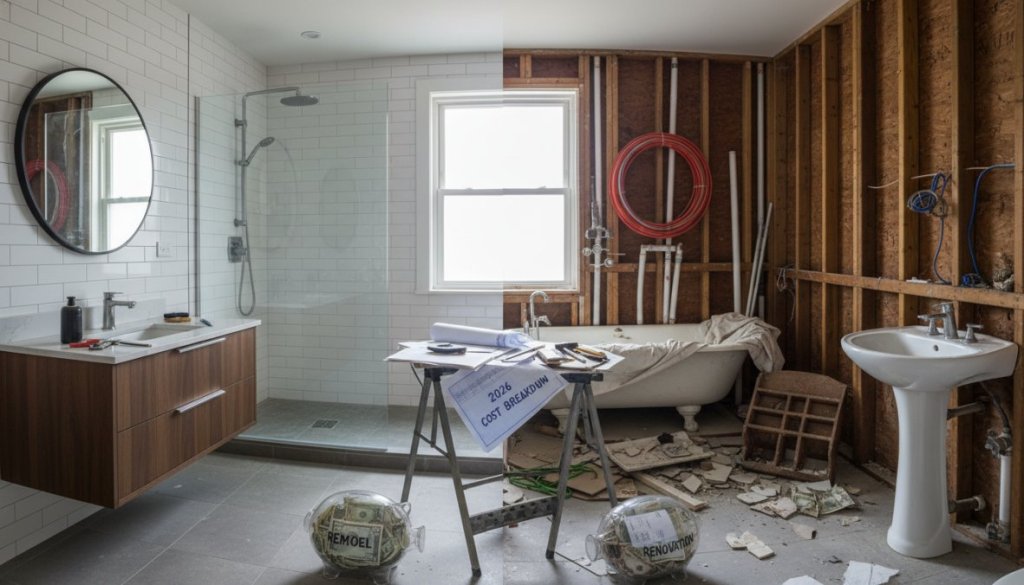
A bathroom remodel is a structural transformation of the space. Remodeling changes the form or function of the bathroom, often involving moving plumbing fixtures, altering the floor plan, adding a walk-in shower where a tub existed, or reconfiguring electrical upgrades to meet new layout demands. Remodeling typically requires permits because it touches load-bearing elements, PEX plumbing lines, or the building’s electrical system.
Defining a Bathroom Renovation
A bathroom renovation restores or updates the existing space without changing its fundamental layout. Renovation work includes replacing surface finishes, swapping out fixtures and fittings, installing new flooring, updating vanity lighting, or refreshing tile work. The plumbing and electrical infrastructure stays where it is. Renovation is often faster, less expensive, and less likely to trigger permit requirements, though this varies by municipality.
Side-by-Side Comparison Table: Remodel vs Renovation
| Factor | Renovation | Remodel |
|---|---|---|
| Scope | Surface updates, cosmetic changes | Structural, layout, or functional changes |
| Permits required | Rarely | Often required |
| Plumbing moved | No | Frequently yes |
| Electrical changes | Minor (fixtures only) | Major upgrades possible |
| Project timeline | 1-3 weeks | 3-8+ weeks |
| Relative cost | Lower | Higher |
| Best for | Dated finishes, worn fixtures | Poor layout, aging infrastructure |
| DIY feasibility | Higher | Lower |
The practical test: if your contractor needs to open a wall or move a drain, you are remodeling, not renovating. That distinction changes your budget conversation immediately.
Average Bathroom Remodel Cost by Project Scope
Project scope is the single biggest driver of bathroom project cost. A half-bath refresh and a full-gut luxury renovation are not on the same spectrum; they are different categories of construction. The table below breaks costs down by both scope tier and individual task, the level of granularity most guides skip, and the level you actually need to pressure-test a contractor quote.
Many homeowners approach a contractor with a vague sense of what they want and receive a quote that surprises them. The reason is almost always scope creep: what starts as a renovation expands into a remodel once hidden damage or outdated plumbing is discovered behind the walls.

Cost by Scope Tier
| Scope Tier | Typical Total Range | What’s Included |
|---|---|---|
| Cosmetic renovation (half-bath or small bath) | $1,500 – $8,000 | Vanity swap, faucet/fixture replacement, paint, basic flooring |
| Mid-range renovation (full bath, no layout change) | $8,000 – $20,000 | Full tile refresh, tub/shower surround, new vanity, lighting, exhaust fan |
| Mid-range remodel (layout or plumbing changes) | $18,000 – $35,000 | Plumbing relocation, walk-in shower conversion, electrical upgrades, permits |
| Full-gut luxury remodel | $35,000 – $75,000+ | Studs-out rebuild, custom tile, custom cabinetry, radiant floor, full permit set |
Ranges reflect national averages across U.S. markets. High-cost metros (New York, San Francisco, Boston) routinely run 30-50% above the upper bound. Rural markets may fall below the lower bound.
Cost by Individual Task
This is the breakdown most guides omit. Understanding per-task costs lets you audit a contractor’s line-item quote and identify where your budget is actually going.
| Task | Typical Cost Range | Notes |
|---|---|---|
| Vanity installation (supply + labor) | $300 – $3,800 | Stock vanity vs. semi-custom vs. custom cabinet drives most of the range |
| Tile work, floor (labor only, per sq ft) | $5 – $15/sq ft | Complexity of pattern and tile size affect labor rate significantly |
| Tile work, shower surround (labor only) | $7 – $20/sq ft | Niche cuts, niches, and linear drains add to labor hours |
| Plumbing fixture replacement (no relocation) | $150 – $600 per fixture | Faucet, showerhead, toilet, labor only, fixtures additional |
| Plumbing rough-in relocation | $500 – $2,500 per drain/supply line | Requires licensed plumber; concrete slab work adds significantly |
| Electrical, exhaust fan replacement | $150 – $400 | Straightforward swap; new circuit adds cost |
| Electrical, heated floor installation | $600 – $1,800 | Includes thermostat; tile labor is separate |
| Subfloor repair (per sq ft) | $5 – $12/sq ft | Rot or water damage discovered at demo; highly variable |
| Permit fees | $50 – $800+ | Varies widely by municipality and scope; always verify locally |
| Dumpster / debris removal | $200 – $600 | Often excluded from contractor quotes; confirm before signing |
Permit fees are almost always excluded from initial contractor estimates. A mid-range remodel in a jurisdiction that requires separate plumbing, electrical, and building permits can add $400-$1,200 in fees alone, plus inspection scheduling delays. Ask every contractor to confirm whether their quote includes permit procurement and fees, or whether those are passed through as a separate line item.
Half-Bath and Small Bathroom Projects
A half-bath (toilet and sink only) or small bathroom renovation is the most accessible project scope. Work typically includes vanity installation, updated plumbing fixtures, new flooring installation, and fresh surface finishes. Because the footprint is small and no structural changes are involved, labor costs and material quantities stay manageable. Many homeowners with basic skills attempt portions of this work as DIY projects, though vanity installation and tile work still benefit from professional execution.
The most common budget mistake at this tier: underestimating tile labor. A 35-square-foot floor sounds trivial, but a skilled tile installer still charges for mobilization, substrate prep, and grouting regardless of square footage. Minimum-call charges from tradespeople are real and worth factoring in.
Mid-Range Primary Bathroom Remodel
The mid-range primary bathroom remodel is where most households land. This scope covers a full tile work refresh, walk-in shower conversion or tub replacement, new vanity and vanity lighting, updated plumbing fixtures, and sometimes electrical upgrades for exhaust fans or heated flooring. Subcontractors for plumbing and electrical are typically required.
The project crosses into remodel territory, and a higher cost tier, if the shower footprint changes or the vanity moves to a new wall. That single decision (move the drain vs. keep it in place) can add $1,500-$4,000 to a project that otherwise looked like a renovation. According to Remodeling Magazine’s Cost vs. Value Report, mid-range bathroom remodels consistently rank among the top home improvement projects for recouped value at resale.
Full-Gut Luxury Renovation
A full-gut renovation means stripping the bathroom to the studs. Every surface finish is removed, plumbing is often re-run, electrical is brought to current code, and the layout may be reimagined entirely. This is the most expensive and most disruptive scope. It is also the only approach that makes sense when a bathroom has significant hidden damage, outdated galvanized plumbing, or a layout that genuinely does not function.
Expect multiple subcontractors, a longer construction timeline, and permit requirements in virtually every jurisdiction. The per-task cost table above applies at this tier, but the totals compound: a full-gut project that hits subfloor rot, requires a new plumbing rough-in, and specifies large-format tile can see the task-level costs stack well past the upper range estimates.
For full-gut projects, request a cost-plus contract structure rather than a fixed-price bid. Fixed-price bids on gut renovations either include a large contingency buffer (you overpay if nothing goes wrong) or exclude it (the contractor comes back for change orders when hidden damage appears). A transparent cost-plus arrangement with a defined contingency line is more honest for both parties.
Key Factors That Influence Bathroom Remodel vs Renovation Cost
The scope of work sets the ceiling, but several variables determine where your actual project lands within that range.
Labor Costs and Subcontractors
Labor is consistently the largest line item in any bathroom project. A renovation handled by a single general contractor costs less in labor than a remodel requiring separate licensed plumbers, electricians, and tile installers. Each subcontractor brings their own scheduling constraints, and coordinating them adds time to the construction timeline. In markets with tight labor availability, subcontractor rates rise. The number of trades involved is a reliable proxy for total project cost: one trade suggests renovation territory, three or more trades signals a remodel.
Building Materials and Fixtures
Building materials and fixtures span an enormous price range. A standard ceramic tile costs a fraction of large-format porcelain or natural stone. A basic vanity from a home improvement center is a fraction of a custom-built cabinet with integrated lighting. The same square footage of tile work can vary dramatically in cost based purely on material selection. The practical advice: set your material budget before you fall in love with a specific finish. Economical sourcing, something Tony’s Home Improvement LLC prioritizes for every client, can close the gap between a mid-range and a near-luxury result without changing the scope.
Hidden Damage, Structural Changes, and Permits
This is the part most guides gloss over. Hidden damage is the most common cause of bathroom project budget overruns. Water damage behind tile, subfloor rot beneath a leaking toilet, or mold discovered during a full-gut renovation can add significant unplanned cost. A contingency budget of 15-20% of your total project estimate is not pessimistic; it is standard practice among experienced contractors.
Permits add cost and time, but they also protect you. Permit fees vary by municipality and project scope. Structural changes, new plumbing rough-ins, and electrical panel work almost always require permits. Surface-only renovations often do not. The National Association of Home Builders guide on permits provides a useful framework for understanding when permits are legally required.
Before requesting contractor quotes, pull your municipality’s permit requirements for bathroom work. Knowing this in advance prevents surprises and signals to contractors that you are an informed client, which tends to produce more accurate initial bids.
Pros and Cons: Remodel vs Renovation
The right choice depends on your bathroom’s condition, your budget, and your timeline, but the decision is more structured than a simple pros/cons list suggests. Most guides give you the list and leave you to figure out which column applies to your situation. This section adds what they skip: a decision framework built around the three real variables that determine whether you should renovate or remodel, plus a breakdown of the hidden cost asymmetry between the two approaches.
The Three-Variable Decision Test
Before reviewing any pros or cons, answer these three questions honestly. They will resolve the decision for most homeowners:
1. What is the condition of your existing plumbing and electrical infrastructure?
If your plumbing is galvanized steel (common in homes built before the 1970s), if you have had recurring drain clogs that suggest aging cast-iron drain lines, or if your bathroom shares a circuit with other rooms and trips breakers, a renovation is a cosmetic fix on a structural problem. You will redo it within five to ten years. A remodel that addresses the infrastructure is the more economical long-term choice even if the upfront cost is higher.
2. Does the current layout functionally work for your household?
If the toilet placement, shower size, or vanity location genuinely impairs daily use, not just aesthetics, only a remodel solves it. Renovation cannot move a drain. If the layout works and the frustration is purely visual (dated tile, worn fixtures, poor lighting), renovation is appropriate and a remodel is over-investment.
3. What is your timeline horizon for this home?
If you are selling within two to three years, a well-executed renovation typically delivers better return on investment than a full remodel because you recover more of the cost at resale relative to what you spend. If you are staying ten or more years, a remodel that fixes infrastructure and layout pays dividends in daily use and deferred maintenance costs that a renovation never captures.
The Hidden Cost Asymmetry Most Guides Miss
Standard pros/cons lists treat renovation as simply "cheaper" and remodel as simply "more expensive." That framing misses a critical asymmetry: a renovation performed on a bathroom that actually needs a remodel creates a compounding cost problem.
Here is the pattern: a homeowner spends $12,000 on a cosmetic renovation, new tile, new vanity, new fixtures. Two years later, a slow leak behind the new tile causes water damage to the new subfloor. The bathroom is opened up, and the plumber finds that the original supply lines were corroding and should have been replaced during the first project. The remediation and replumbing cost $8,000. Total spend over three years: $20,000, more than a mid-range remodel would have cost at the outset, with years of disruption and a bathroom that is now partially new and partially original.
This is not a hypothetical. It is one of the most common patterns experienced contractors see. The renovation-vs-remodel decision is not just about upfront cost; it is about the total cost of ownership over your ownership horizon.
If a home inspection, a previous contractor, or your own observation has flagged moisture intrusion, soft spots in the subfloor, or discoloration on the ceiling below an upstairs bathroom, do not proceed with a surface renovation until the source is identified. Tiling over an active moisture problem accelerates structural damage and creates mold conditions behind new finishes. The cost of investigation before renovation is always less than the cost of remediation after.
Renovation: Genuine Strengths and Real Limitations
Where renovation is the right call:
- The bathroom infrastructure (plumbing, electrical, subfloor) is in good condition and a licensed plumber or inspector has confirmed it
- The layout functions well and the frustration is cosmetic: dated tile, worn fixtures, poor lighting
- Your timeline horizon is under five years and resale ROI is the primary goal
- Budget is constrained and a phased approach makes sense (renovate now, remodel in a future project)
- The bathroom is a secondary or guest bath where functional optimization is less critical
Where renovation falls short:
- It cannot address a poor layout, drain locations are fixed unless you remodel
- It does not extend the life of aging plumbing or electrical infrastructure
- Surface finishes installed over a compromised substrate will fail prematurely
- It may not satisfy permit requirements if the scope expands mid-project
Remodel: Genuine Strengths and Real Limitations
Where remodeling is the right call:
- Infrastructure is aging or has known issues (galvanized supply lines, outdated wiring, subfloor damage)
- The layout genuinely impairs daily use and cannot be solved by fixture swaps alone
- You are staying in the home long-term and want to amortize the investment over years of use
- You want to bring the bathroom to current code, which matters for insurance and future resale disclosure
- Hidden damage has already been identified and a renovation would simply cover it
Where remodeling is over-investment:
- The bathroom is in a home priced at the lower end of its neighborhood, a luxury remodel will not return its cost at resale
- The existing infrastructure is sound and the layout works, you are paying for structural work that delivers no functional benefit
- Your timeline is short and the disruption of a multi-week remodel outweighs the benefit
The Honest Take
Many homeowners choose renovation when they should be remodeling, usually because the upfront cost difference is visible and the long-term cost asymmetry is not. The inverse also happens: homeowners pursue full-gut remodels on bathrooms with sound infrastructure because the scope feels more substantial. Neither error is inevitable if you start with an honest assessment of your infrastructure condition, your layout needs, and your ownership timeline.
A qualified contractor should be willing to tell you which category your bathroom actually falls into before you commit to a scope. If a contractor immediately quotes a full remodel without assessing existing conditions, or immediately steers you toward a renovation without checking what is behind the walls, that is a signal worth noting.
The renovation-vs-remodel decision is fundamentally a total cost of ownership question, not just an upfront cost question. A renovation on a bathroom that needs a remodel is rarely the cheaper option when measured over five or more years of ownership.
Bathroom Renovation Timeline: How Long Each Approach Takes
The bathroom renovation timeline is one of the most underestimated aspects of project planning. Most homeowners budget for cost carefully but underplan for time, which creates stress and sometimes forces poor decisions mid-project.
A straightforward cosmetic renovation, new fixtures, flooring installation, and surface finishes, typically runs one to three weeks from demolition to completion. A mid-range remodel involving plumbing fixture relocation and tile work runs three to six weeks. A full-gut renovation with structural changes, permit processing, and multiple subcontractors can extend to eight weeks or longer.
Permit processing time is the most variable factor. Some municipalities issue permits within days; others take several weeks. This is worth researching before you schedule your contractor. A project that starts without a permit and then requires one mid-construction faces the worst of both worlds: delays and potential rework.
The construction timeline also depends on material lead times. Custom vanities, specialty tile, and certain plumbing fixtures can have lead times of four to eight weeks. Ordering materials before demolition begins is standard practice for experienced project managers.
The bathroom renovation timeline is almost always longer than the initial estimate suggests. Build in a buffer of at least one week for a renovation and two weeks for a remodel. Projects that hit their original timeline are the exception, not the rule.
Bathroom Remodel ROI and Resale Value
The bathroom remodel ROI question is more nuanced than most cost-vs-value guides suggest. The return depends heavily on your local market, the project scope relative to the home’s overall value, and the quality of execution.
A mid-range bathroom remodel consistently delivers meaningful resale value, particularly in markets where buyers expect updated primary bathrooms. A luxury renovation in a mid-market home, however, rarely returns its full cost at resale. The principle is straightforward: match your investment to the price point of comparable homes in your neighborhood.
According to the National Association of Realtors’ Remodeling Impact Report, bathroom renovations rank among the top projects for both cost recovery and buyer appeal. The highest returns come from projects that modernize without over-improving for the neighborhood.
Sustainability and Energy Efficiency ROI
This is an angle most bathroom project guides skip entirely. Water-efficient plumbing fixtures, LED vanity lighting, and low-flow showerheads reduce utility costs over time, creating a return that standard ROI calculations miss. In many jurisdictions, energy-efficient upgrades also qualify for rebates or tax credits, which offset a portion of the upfront project cost.
Specifying WaterSense-certified plumbing fixtures during a remodel adds minimal cost at the time of installation but produces ongoing savings. The same logic applies to ventilation: a properly sized exhaust fan prevents moisture damage, which is one of the most common sources of hidden damage in future renovations.
Financing Options to Fund Your Project
Most homeowners fund bathroom projects through one of four mechanisms: cash savings, home equity lines of credit (HELOCs), home equity loans, or personal loans. Each has a different cost structure and risk profile.
A HELOC or home equity loan typically carries lower interest rates than personal loans because the debt is secured by the property. This makes them appropriate for larger remodel scopes. Personal loans are faster to obtain and do not put the home at risk, making them a reasonable choice for smaller renovation projects. Cash remains the simplest option when available, eliminating interest cost entirely.
The Consumer Financial Protection Bureau’s guide to home equity financing is a useful starting point for understanding the differences between HELOC and home equity loan structures before you commit.
Bathroom Renovation Checklist: Planning Your Project Step by Step
A structured bathroom renovation checklist prevents the two most common project failures: budget overruns from poor scope definition and timeline delays from inadequate pre-planning.
- Define project scope: renovation (surface updates) or remodel (structural changes)
- Set total budget including a 15-20% contingency for hidden damage
- Research local permit requirements for your specific scope of work
- Identify and order long-lead materials (custom vanity, specialty tile) before demolition
- Request at least three contractor quotes with itemized labor and material breakdowns
- Verify contractor licensing, insurance, and references
- Confirm subcontractor availability for plumbing and electrical if remodeling
- Establish a construction timeline with milestone dates
- Arrange temporary bathroom access if the primary bathroom will be out of service
- Document existing conditions with photos before demolition begins
- Review permit requirements one final time before work starts
- Schedule inspections at required milestones (rough plumbing, electrical rough-in, final)

DIY vs Professional: When to Call a Contractor
The DIY vs professional question is not binary. Most bathroom projects have components that homeowners can handle and components that require licensed professionals.
Painting, basic fixture swaps (faucets, towel bars, toilet seats), and some flooring installation fall within reach for a competent DIYer. Tile work is achievable with preparation but unforgiving of mistakes; a poorly set tile floor is expensive to redo. Vanity installation sits in the middle: manageable for someone comfortable with basic plumbing connections, but worth professional involvement if the drain location needs adjustment.
The line is clear for anything involving structural changes, moving drain lines, or electrical panel work. These require licensed subcontractors in virtually every jurisdiction, and attempting them without proper licensing voids permits and creates liability. The cost of a licensed plumber for a single rough-in is far less than the cost of remediation when unlicensed work fails.
Tony’s Home Improvement LLC takes a practical approach here: we assess which portions of a project genuinely benefit from professional execution and which a motivated homeowner could handle, then build a plan that maximizes value without creating risk. That kind of clear communication is what separates a trustworthy contractor from one who simply quotes the maximum scope.
Deciding between a bathroom remodel and a renovation is genuinely complex when you factor in scope, hidden damage risk, permit requirements, and resale value. Tony’s Home Improvement LLC brings professional expertise and meticulous attention to detail to both renovation and full-gut remodel projects, with a track record of economical material sourcing that keeps costs honest without compromising quality. If you are ready to get a clear, itemized picture of what your project actually requires, contact Tony’s Home Improvement LLC and get a straightforward assessment before committing to a scope.
Frequently Asked Questions
What is the difference between a bathroom remodel and a renovation?
A bathroom remodel changes the layout, structure, or function of the space, such as moving plumbing fixtures, adding a walk-in shower, or making electrical upgrades. A renovation restores or updates existing elements without structural changes, like replacing surface finishes, flooring installation, or swapping out a vanity. Remodels typically cost more and take longer due to expanded project scope, subcontractor involvement, and permitting requirements. Renovations are generally faster and more budget-friendly.
Is a bathroom remodel cheaper than a renovation?
Generally, no. A bathroom remodel involves structural changes, rip-and-replace work, and often requires permits, licensed subcontractors, and new plumbing or electrical upgrades, all of which drive up labor costs. A renovation focuses on surface finishes and cosmetic updates, keeping costs lower. However, if hidden damage is discovered during a renovation, such as water-damaged subfloor or outdated PEX plumbing, the budget can quickly approach remodel territory. Always get multiple contractor quotes and budget a 15-20% contingency.
How much does a typical bathroom remodel cost in 2026?
The average bathroom remodel cost varies significantly by scope. A basic half-bath refresh can run a few thousand dollars, while a mid-range primary bathroom remodel typically falls in the $10,000-$25,000 range depending on square footage, building materials, and labor costs in your area. A full-gut luxury renovation with custom tile work, a walk-in shower, and premium fixtures and fittings can exceed $40,000. Always request itemized contractor quotes to compare plumbing, electrical, and flooring installation costs separately.
Does a bathroom renovation add more value than a remodel?
Not necessarily, bathroom remodel ROI depends on the scope and quality of work, not just the label. A mid-range remodel that modernizes a dated primary bathroom typically offers strong resale value by improving buyer appeal. A luxury renovation may not fully recoup its cost at resale but significantly improves livability. For maximum home equity impact, focus on projects that address functional issues, update plumbing fixtures, and improve energy efficiency rather than purely cosmetic upgrades.
What are the most expensive parts of a bathroom remodel?
Labor costs and structural changes are usually the biggest line items in a bathroom remodel budget. Moving plumbing fixtures or upgrading to PEX plumbing requires licensed plumbers, which adds significant cost. Tile work, especially for a walk-in shower or full flooring installation, is both material- and labor-intensive. Vanity installation, vanity lighting upgrades, and electrical work also add up quickly. Permits and inspections are often overlooked but can add hundreds to thousands depending on your municipality.
How do I use a bathroom renovation checklist to stay on budget?
Start your bathroom renovation checklist by defining your project scope clearly, renovation or remodel, then get at least three contractor quotes for each major task: plumbing, tile work, flooring installation, and electrical upgrades. Establish your total budget before selecting building materials. Factor in permit costs, a contingency fund for hidden damage, and a construction timeline. Tools like Remodelum or HomeZada can help you track actual spending against your planned budget throughout the project.
This article was written using GrandRanker
 Tony's Home Improvement LLC
Leave a comment